



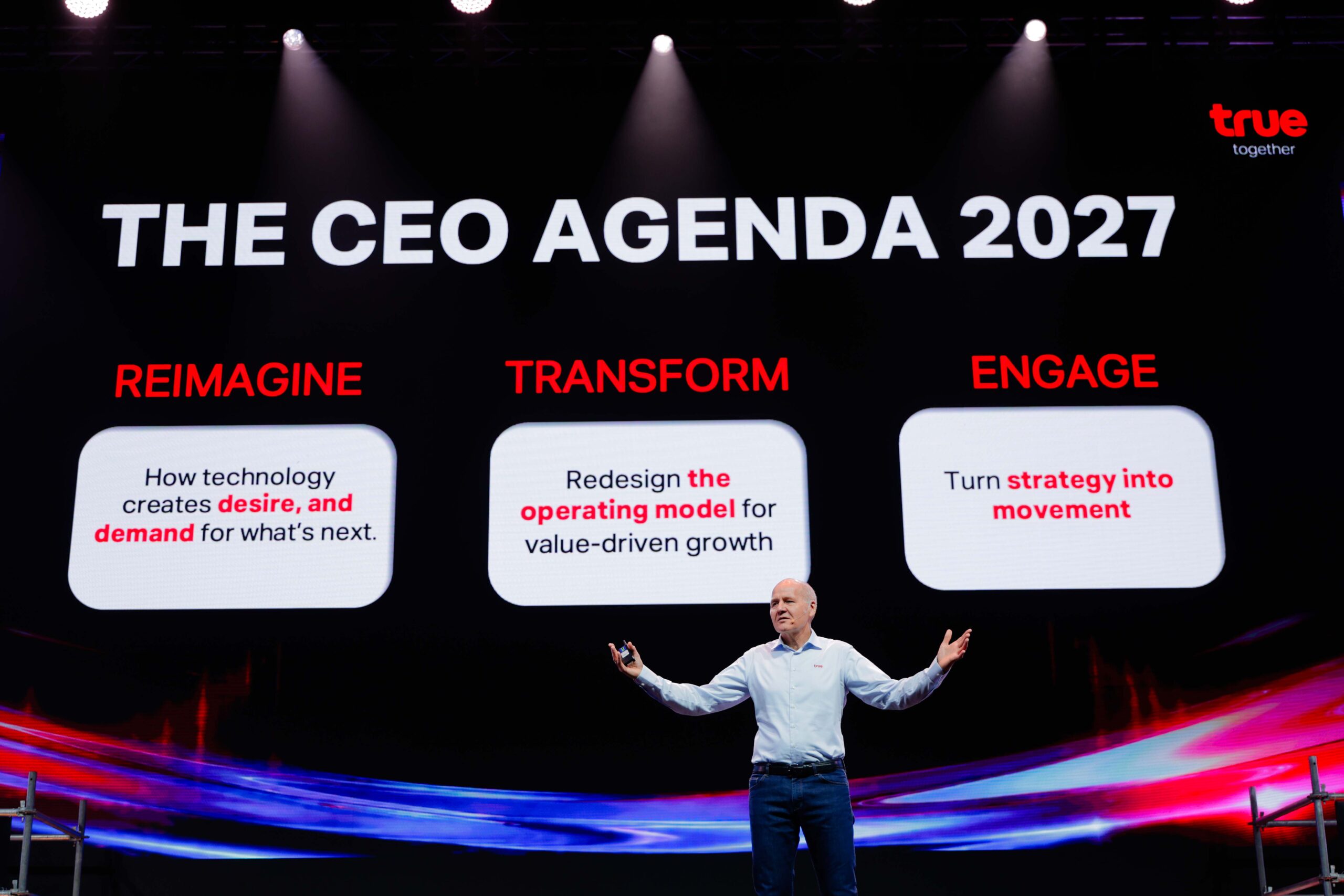

By Sigve Brekke, GCEO, True Corporation Plc.
Only a few years ago, the breakthrough in generative AI allowed us for the first time to ask a machine a question and receive a remarkably human-like answer. OpenAI’s GPT-6 Astra and Anthropic’s Claude Fable 5.1 represent the latest frontiers in what machines can now do across coding, computer use, and scientific work. But the real problem for business leaders is the speed at which the boundary of what machines can do keeps moving.
A capability that looked experimental six months ago can suddenly become commercially relevant. For many years, transformation was treated as a linear sequence; leaders set strategy, organizations implemented it over several years, and eventually a new operating model emerged.
That sequence is no longer sustainable. The question is no longer whether we have the right strategy. It is whether we can translate strategy into action quickly enough before technology once again changes what is possible around us.
Reimagine Where Value Is Moving
Think about the watch. For generations, it told the time. Then technology made the wrist a platform for communication, activity tracking, and health intelligence. Customers did not ask for these capabilities as they could not have imagined many of these groundbreaking features. Yet once they experienced them, what customers valued fundamentally and intuitively changed.
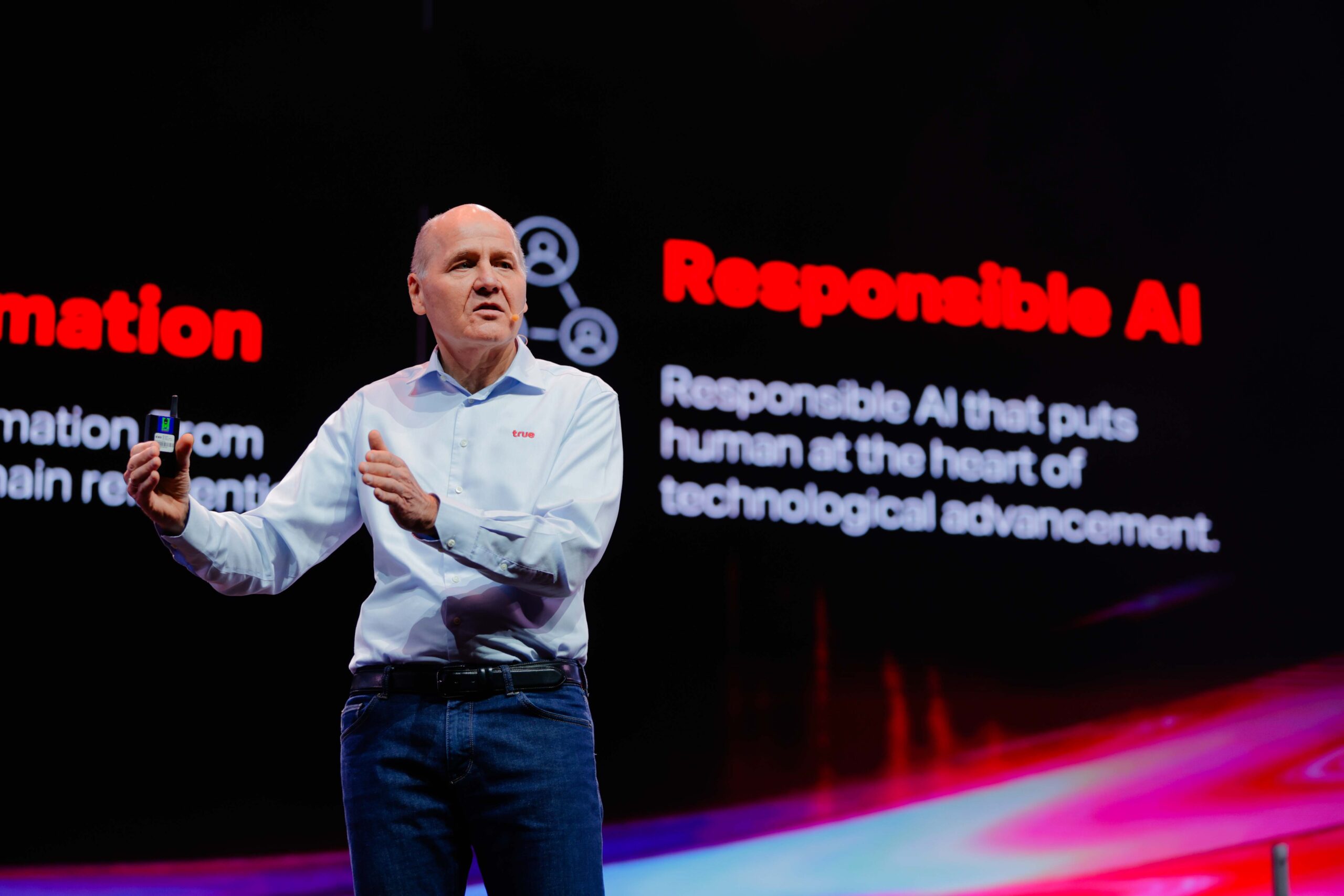
We must understand what technology makes possible. Recently I came across a Consumer for the Future 2026 report by BCG which calls out AI’s role in consumer purchasing decisions. AI is rapidly becoming an important decision-making partner for consumers. 70% of consumers ultimately buy what AI recommends. AI is no longer simply helping customers search. It can understand intent, compare alternatives, understand the fit with lifestyle, filter thousands of choices and recommend what comes next, in seconds. That means technology is beginning to sit between the customer and the brand. It is influencing what customers discover, what they consider and increasingly, what they choose.
And this is why CEOs cannot only study existing customer demand. Technology is moving too fast for that. That shift demands moving from broad segmentation toward more contextual, hyper personalized understanding of what individual customers actually want.
Transform the System
Many organizations have AI ambitions. Many are deploying tools and building use cases. But adoption and transformation are not the same thing. A company can make existing tasks faster without fundamentally changing how the business works. That is automation and it is valuable. But it is not transformation.
True transformation requires redesigning how work operates when AI is built in from the start, not as an afterthought layered onto existing processes. This means rethinking where decisions happen, how data flows, what remains human responsibility, and what entirely new capabilities become possible because AI changes what the organization can do.
At True, our focus is to build an end-to-end AI business operating model. An AI Center of Excellence has been established to govern a clear operating model to connect business, technology and execution. True appointed a Chief Data and AI Officer in 2025, placing clear leadership, ownership and accountability at the center of our AI transformation. We also implement all AI use cases under a centralized Value Realization framework that identifies, prioritizes and tracks every AI initiative against measurable business value. We’re strengthening a single data foundation to enable AI to scale with more consistent and trusted data. Building on these foundations, we have also kicked off an end-to-end domain transformation. The goal is not simply to improve individual tasks but to redesign how the whole function works.
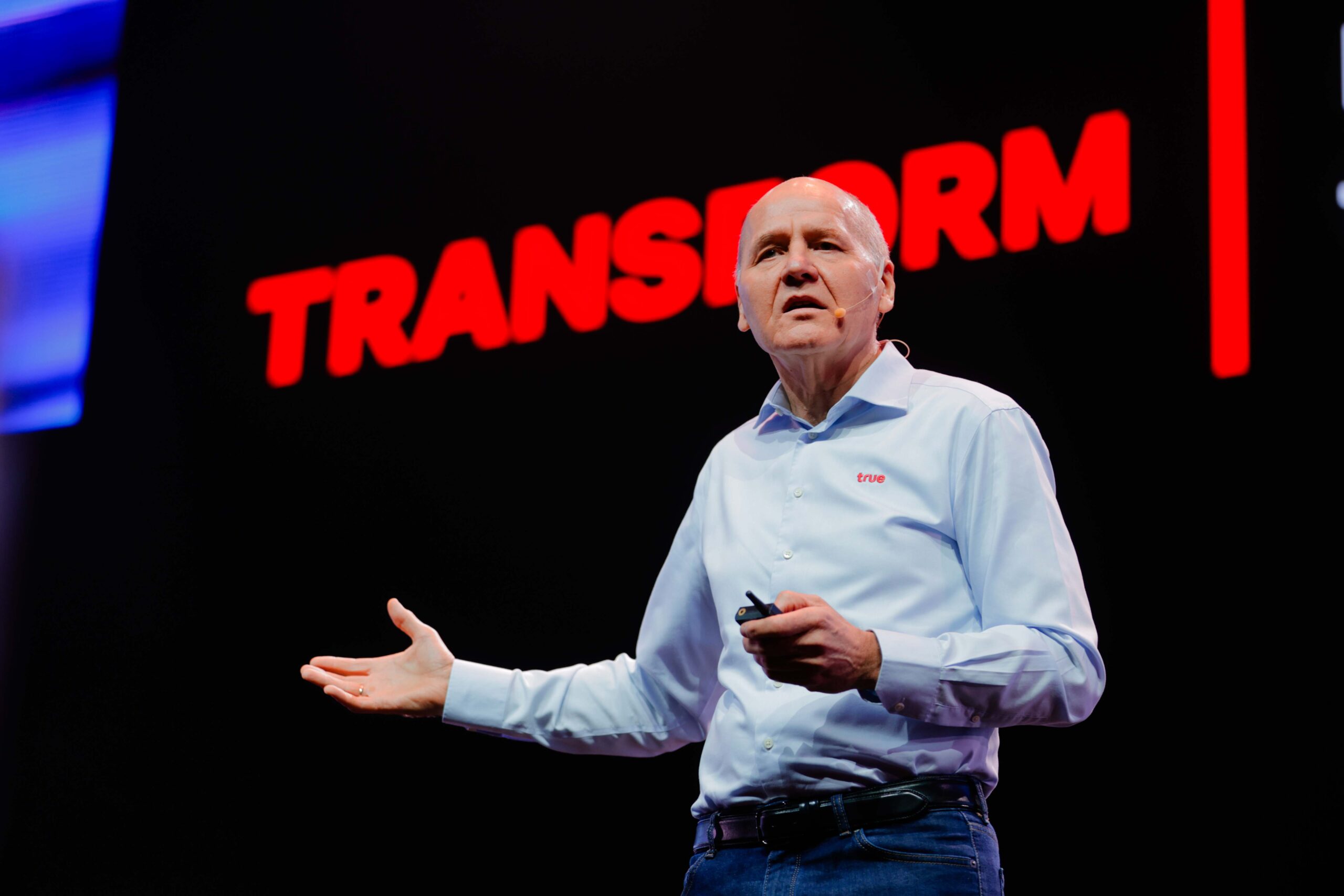
Last but not least, responsible AI practical framework is embedded into that operating model, keeping people, trust and accountability at the center.
Engage People Until Strategy Becomes Behavior and Culture Finally
Even a redesigned operating model remains theoretical until people start behaving differently.
In our experience, building organizational capability means combining centralized data and systems with genuinely decentralized decision-making. We have divided the market into around 6,000 Nano Clusters and are developing people we describe as Mini-CEOs, with greater ownership of their local markets. This requires more than structural change. It requires equipping people at the frontline with insights and intelligence they need, clarity about what they’re accountable for, real authority to make decisions, and resources to execute.
Although AI can identify patterns across enormous amounts of information, it is people close to customers who bring context, judgment, and the ability to act on what that intelligence means locally. Neither works without the other. This is why I believe a CEO must act as Chief Engagement Officer, mobilizing the organization around one shared story and empowering people to move together.
Three years into a major organizational transformation, one thing has become much clearer to me; To make people move, we need to create a burning platform to make people understand why change is necessary, give them a north star where the organization is going, and build the skills and mindset that allow them to work differently. People need to know how to operate in the new model, and have the confidence, ownership and psychological safety to act. Repeated decisions become repeated behavior. Repeated behavior becomes culture. Culture eventually shows up in results.
The latest AI models remind us that the next shift may arrive before the last transformation is complete. For leaders, that means execution can no longer be treated as the final stage of strategy. It is the capability that allows strategy itself to keep pace with change.