



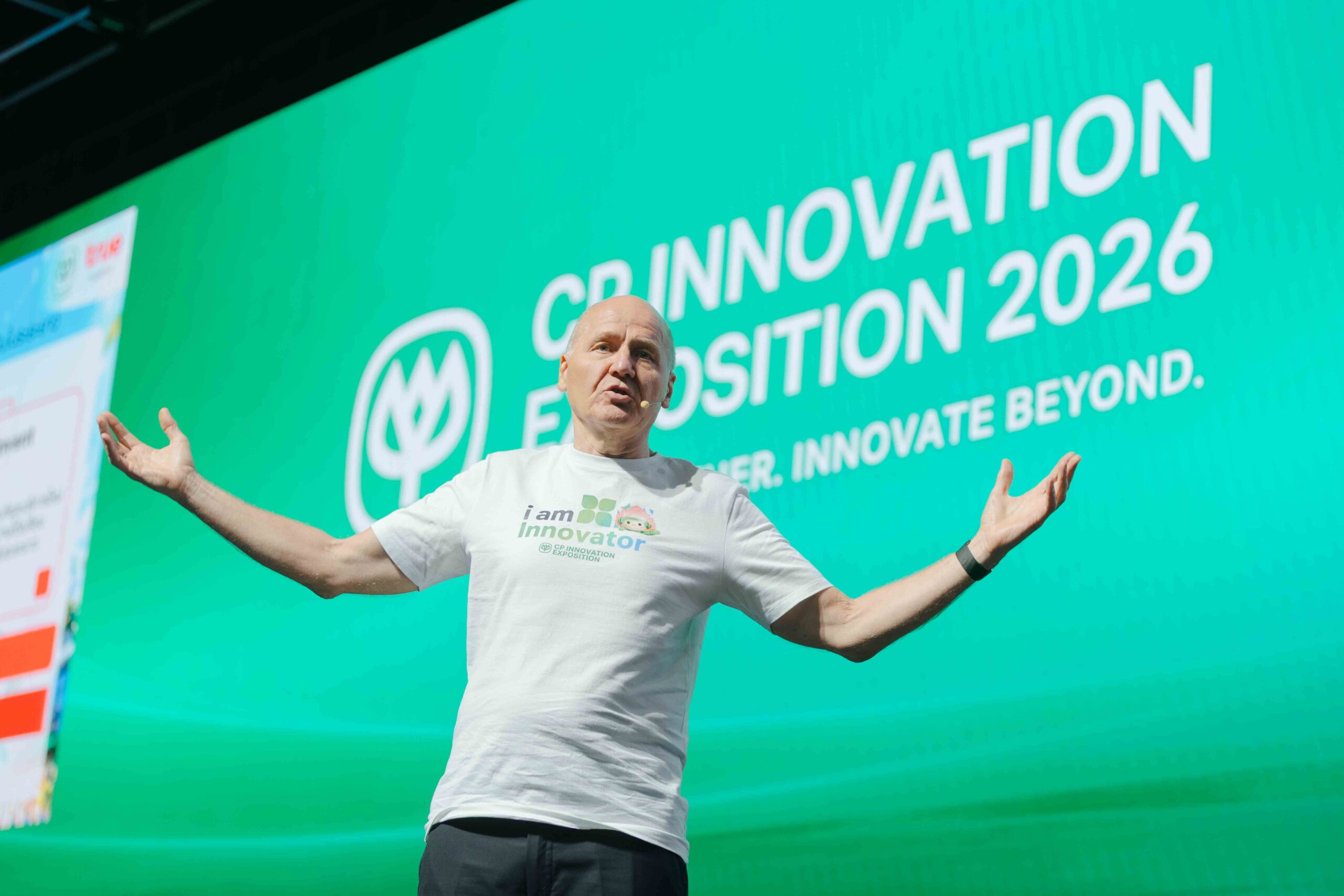

The CP Innovation Exposition 2026 brought together five technology partners: True, AWS, Huawei, Microsoft and Alibaba Cloud to shared their perspectives on the challenging theme “Beyond Connectivity: Building the Intelligent Future”. When AI accelerates, the world takes notice. The competitive landscape for AI is entering a new phase, moving from experimentation to deployment across organizations and, increasingly, at a national level. The core challenge is to turn AI tokens (AI-driven outputs or operations) into measurable business value through lower costs, higher productivity and new revenue streams. Successful AI transformation therefore requires changes in business processes, organizational structures and workforce skills to achieve “AI at scale” and to strengthen competitive advantages.
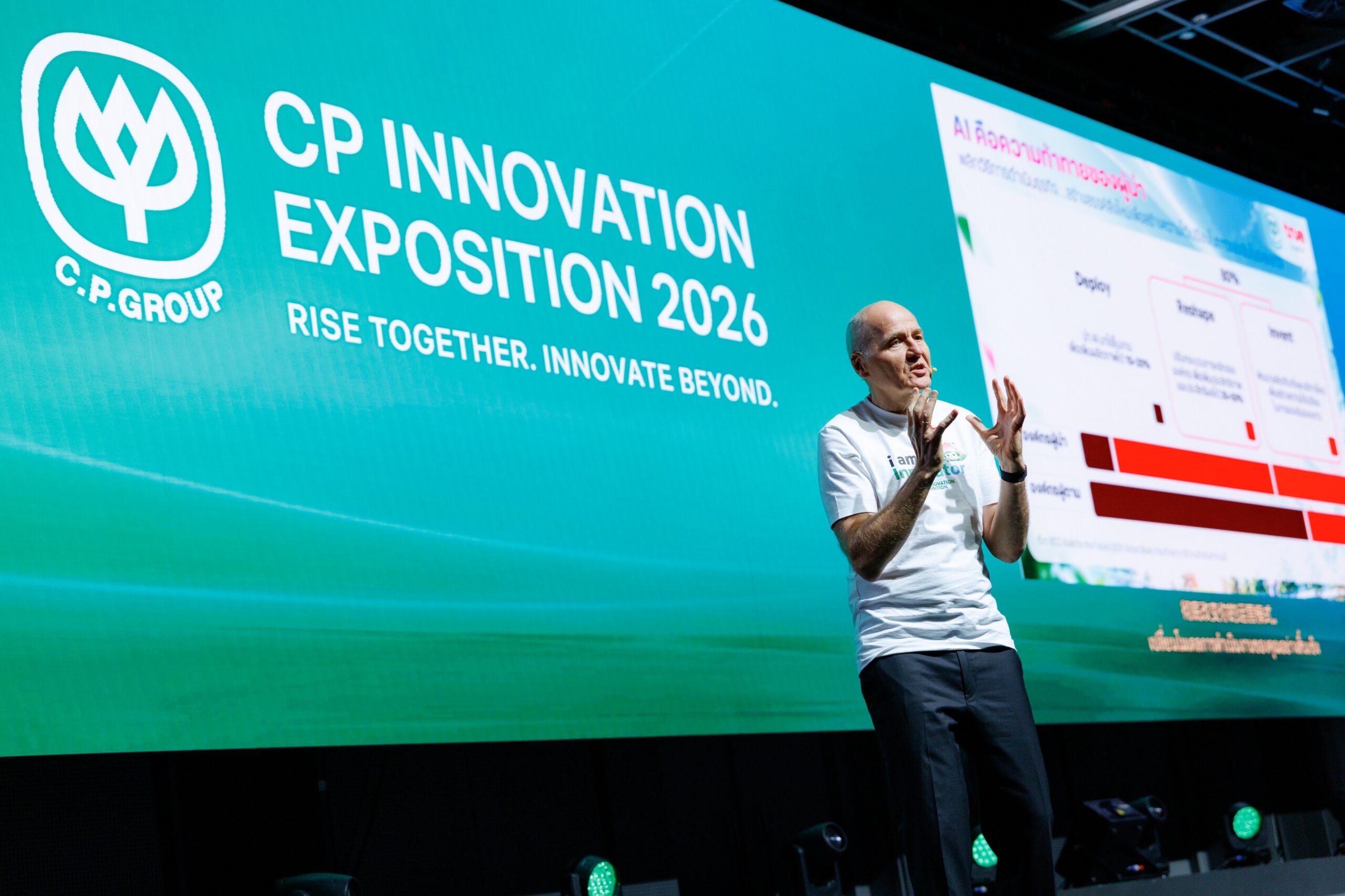
True highlights the vision of the organization as a leader and a follower.
Sigve Brekke, Group Chief Executive Officer of True Corporation Plc, said that an AI-driven transformation must begin with the mindset of leaders, alongside changes to business models and employee roles. According to data from the Boston Consulting Group (BCG), chief executives at organizations that lead in AI spend more than eight hours a week learning about and working with AI, compared with around five hours for those at organizations lagging behind. Furthermore, the proportion of employees who have been upskilled stands at 70% among leading organizations, compared with 35% among those that lag behind. The BCG “Build for the Future 2025” study, which surveyed 500 leading companies, also found that AI leading organizations devote around 80% of their efforts to reshaping business processes and creating new innovations, categorized as “Reshape” and “Invent”, whereas lagging organizations remain focused on improving the efficiency of existing processes.
Basic AI deployment can improve productivity by around 10 – 20%, while reshaping core processes can improve efficiency and effectiveness by 30 – 50%, while “Invent” focuses on developing new products, services and business models.
Mr Brekke proposes three strategies:
- Reimagine: Use technology to unlock new possibilities to create new demand.
- Transform: Transform the end-to-end operating model.
- Engage: Get everyone on board and aligned with the same North Star.
True has established a centralized team of AI specialists (Centre of Excellence) and a Chief AI Officer role to drive adoption, with a goal of ensuring 100% of its workforce acquires foundational AI skills. The company has also transitioned from retrospective reporting to a real-time data platform that integrates sales, revenue, costs and network usage with AI-powered recommendation systems. Furthermore, it has adopted a “Mini-CEO” management model giving local leaders responsibility for more than 6,000 sub-areas, empowering those in charge to leverage data and AI-driven insights for decision-making, effectively decentralizing data-driven management.
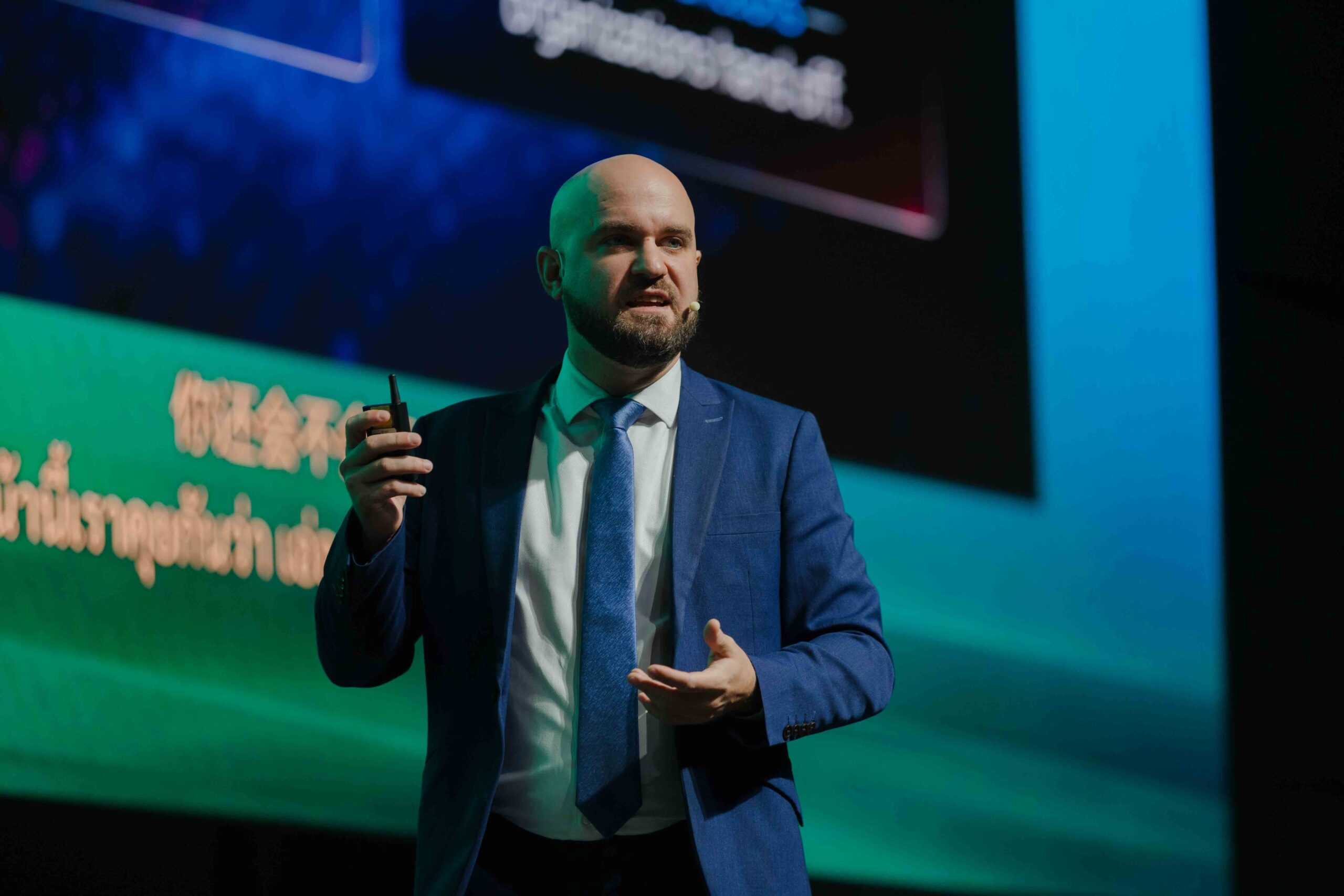
AWS recommends organizational transformation to support AI at scale
Olivier Klein, Chief Technologist, Asia Pacific & Japan, Amazon Web Services, said the challenge for organizations is to scale AI adoption in ways that deliver tangible business outcomes, moving beyond cost reduction toward the redesign of processes, services and customer experiences. Furthermore, AI is facilitating a shift away from traditional pyramid-shaped organizationa structures where growth depends on increasing headcount towards smaller, more agile, mission-driven teams.
AWS employs the “Two-Pizza Teams” concept to organize small, goal-oriented teams with specific objectives, helping reduce delivery times from several weeks to just a few days. Meanwhile, AI now enables employees without programming skills to develop tools and products using natural language. Employees’ roles are consequently evolving from specialized practitioners into “Product Builders”, a transition that requires a combination of business acumen, creativity and sound judgment applied in tandem with AI.
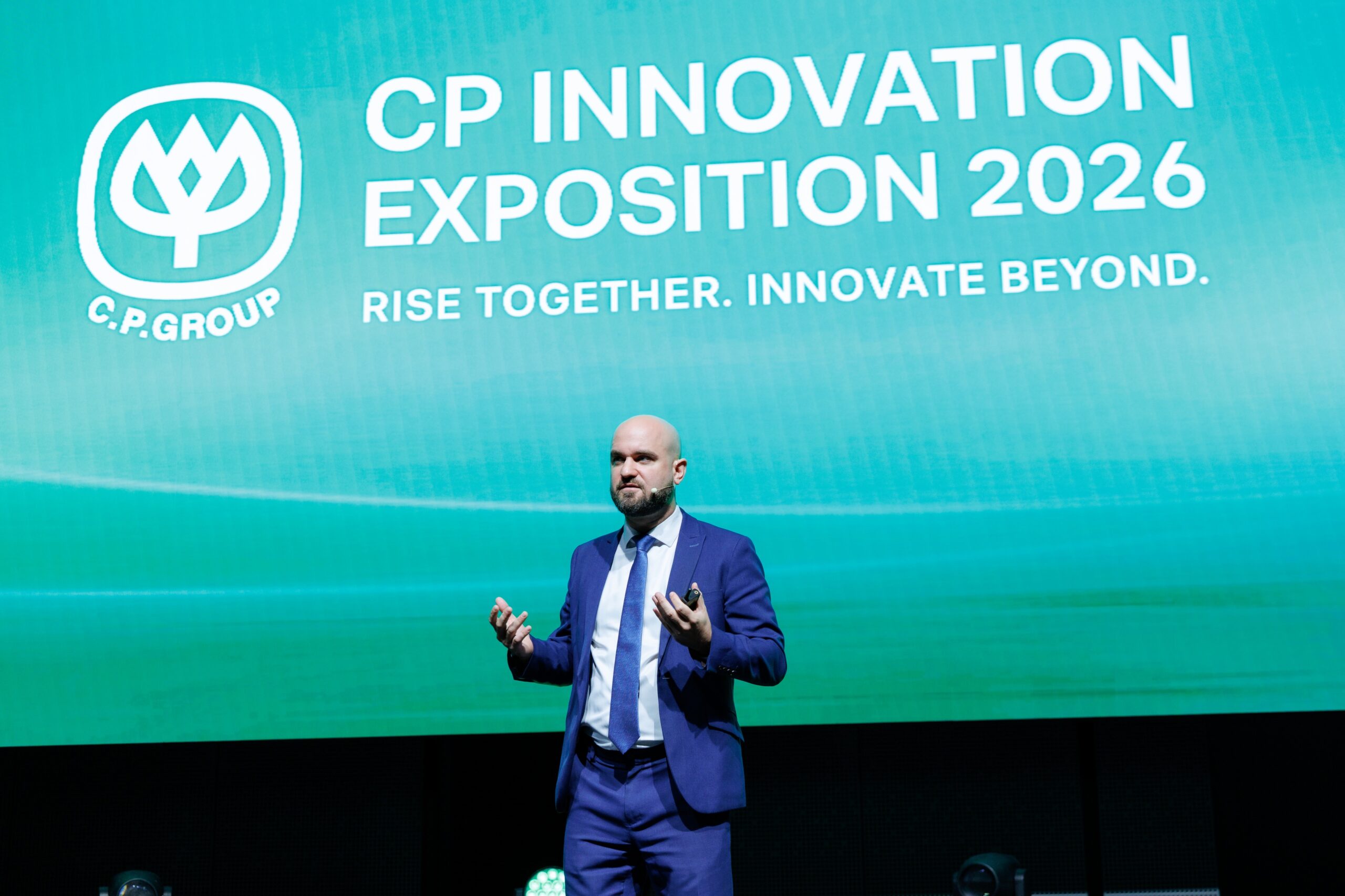
In Thailand, AWS sees opportunities to improve productivity across the tourism, agriculture, healthcare and public service sectors, having already provided AI skills training to more than 160,000 people in the country. However, skills development must go hand in hand with changes to processes and systems to enable practical, scalable implementation.
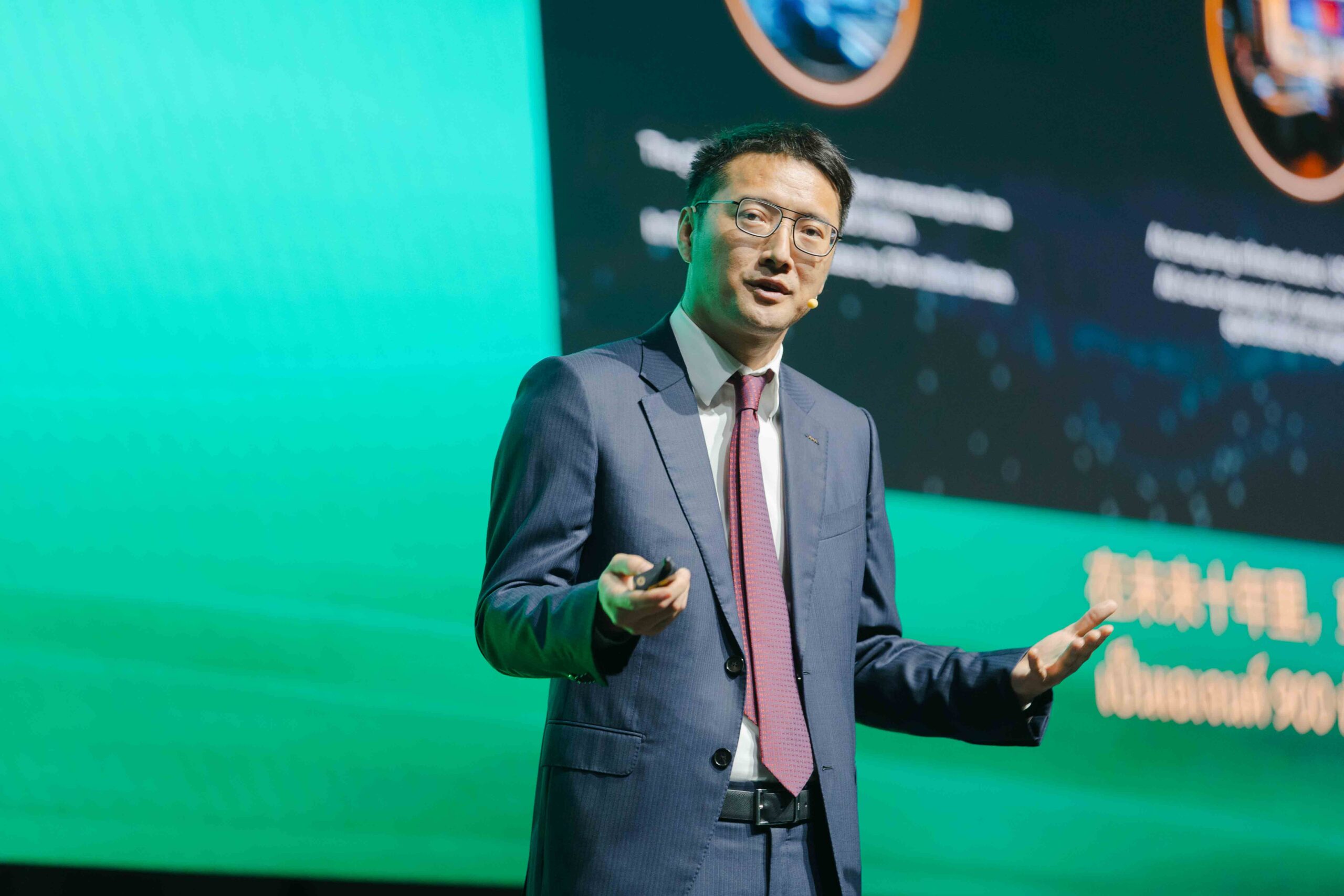
Huawei Reveals Rapid Growth in AI Adoption in Thailand; Scaling Up Remains the Key Challenge
Vincent Liu, Vice President, Huawei ICT, said that AI token consumption in Thailand increased approximately 30-fold between April and September compared to the January level. Yet only 12.4% of the working-age population regularly uses AI, compared with 60% in Singapore, highlighting the gap in translating AI demand into economic productivity.

Huawei also cited a global AI infrastructure investment value of US$1.3 trillion and predicted that the number of AI agents could reach 900 billion over the next decade. Infrastructure will therefore need to support computing power, data storage, networks, security and the management of vast numbers of agents. The company proposes using open-source models customized with enterprise data and local context, saying this approach could reduce the cost of scaling AI systems by nearly 50%. It also stressed the importance of selecting models according to specific mission requirements, token costs, security requirements and data sovereignty. For Thailand, AI adoption must extend across government, finance, healthcare, education, manufacturing and energy to translate infrastructure investment into national productivity gains.

Microsoft: the frontier firm where humans work alongside AI agents
Mark Anthony Souza, Chief Technology Officer of Microsoft Asia, Microsoft said Agentic AI is giving rise to a new organizational model the “Frontier Firm” that systematically integrates humans and AI agents into business processes. In such organizations roles must be redefined: AI agents take on repetitive tasks, data analysis and multi-step workflows, while humans focus on strategy, decision-making and overseeing outcomes. This shift is creating the role of the “Agent Boss”, a manager of AI agents capable of delegating tasks to AI agents, monitors their performance and coordinates their work. The approach allows organizations to expand their capabilities without a proportional increase in headcount. Ultimately, the success of a Frontier Firm therefore depends on work design, workforce development and governance that enables people and AI to collaborate effectively, rather than simply on the number of agents deployed.

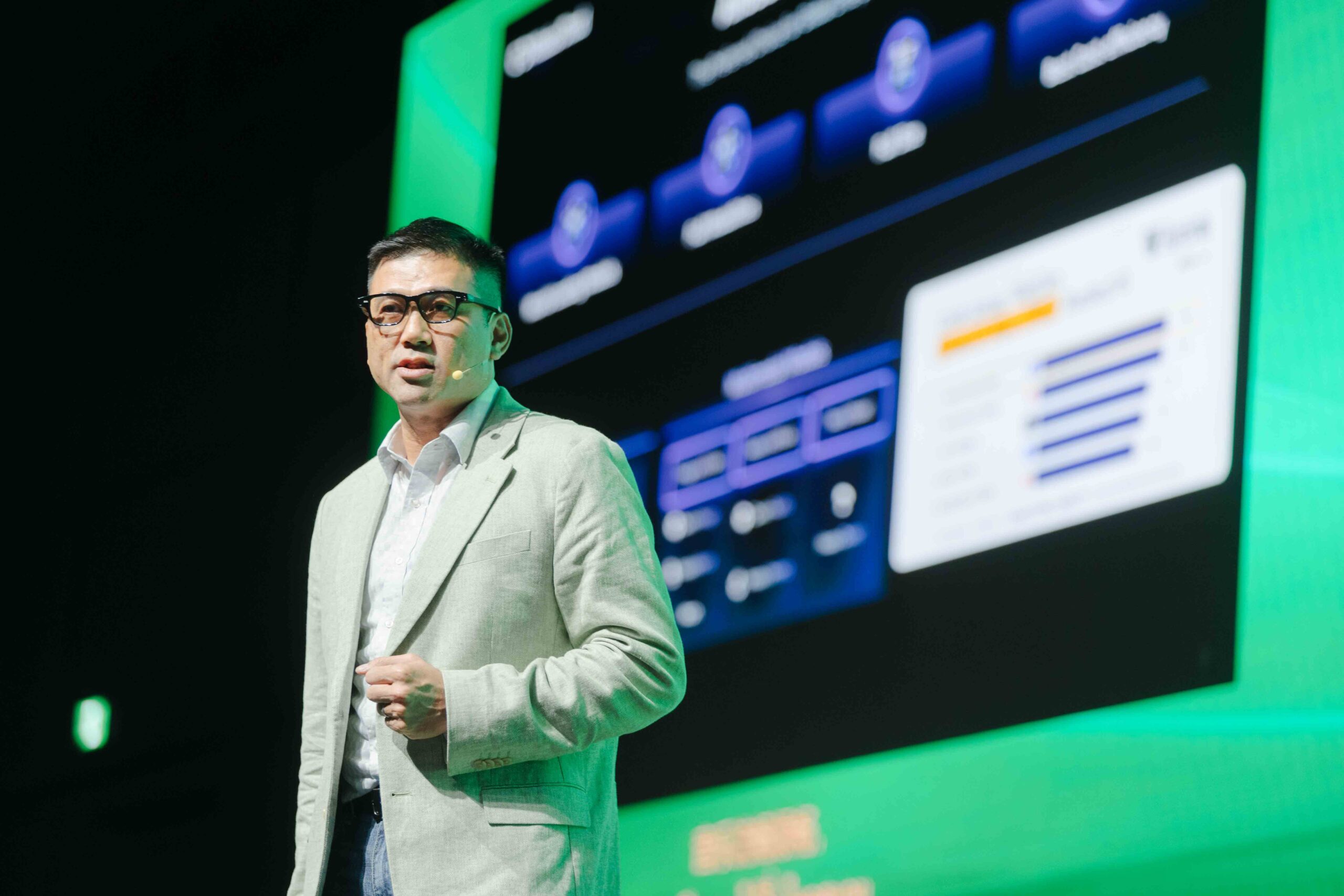
Alibaba Cloud Transforms Tokens into Revenue
Andy Lee, Vice President for International Business and General Manager for ASEAN Region at Alibaba Cloud, said the core of AI transformation is converting AI tokens into analytical capabilities, action and measurable business outcomes. Natural language is becoming a new form of “source code”, enabling people without programming skills to develop applications and direct AI agents. The company said its “Agent Suite” attracted 13 million users within its first month, more than half of them enterprise users, while 60% of users of its coding tools did not need to write code themselves.
Examples of cost savings include producing high-quality videos with just one person at a cost of less than US$18 per clip. The company also said its AI Energy Expert solution had helped Bangkok Hospital achieve energy savings of up to 15%.
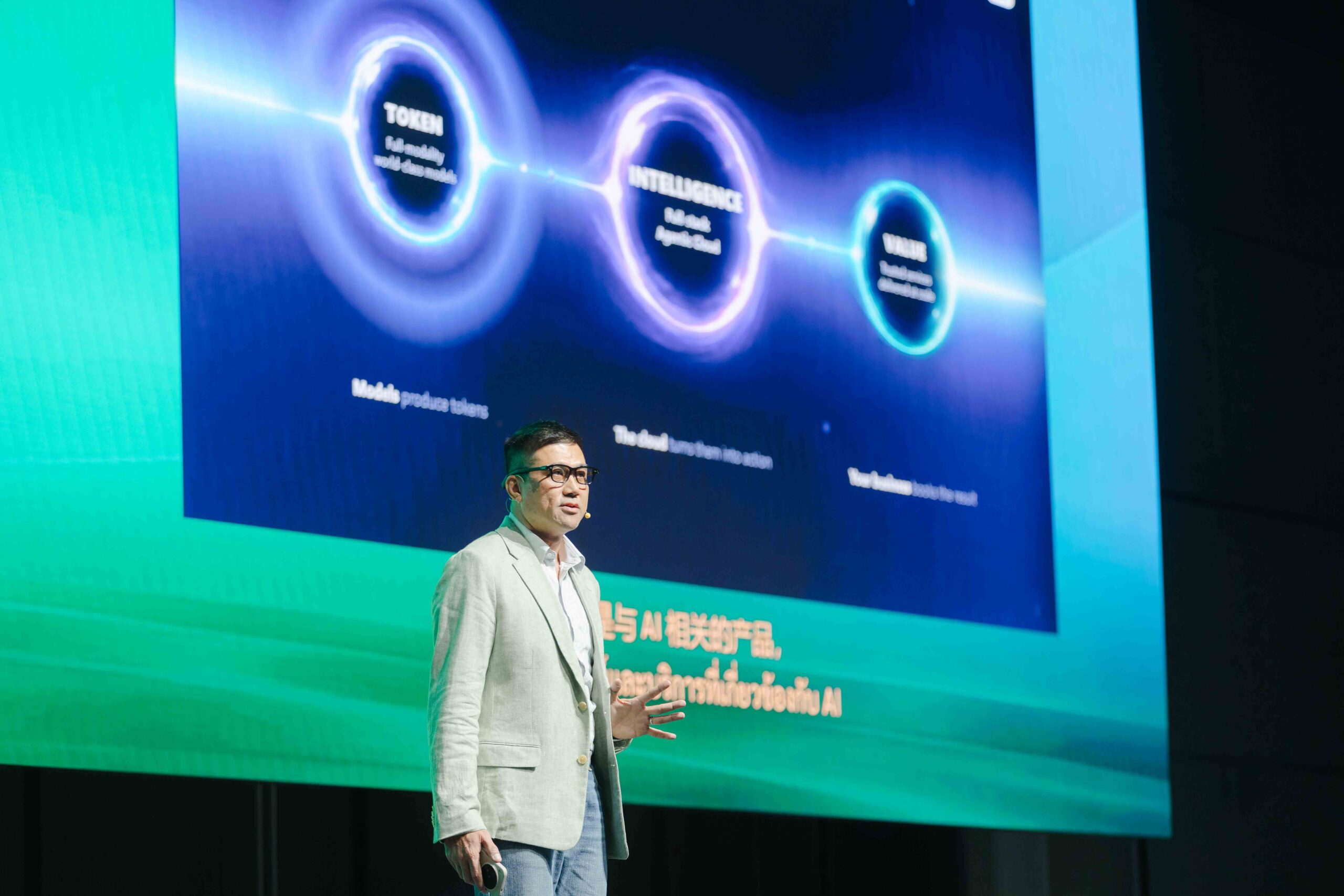
In Thailand, Alibaba Cloud operates two data centers in Bangkok and works with the Charoen Pokphand Group through True IDC to support domestic computing and data storage. CP’s network of approximately 19,000 retail outlets across 7-Eleven, Makro and Lotus’s also presents opportunities to deploy AI agents in areas ranging from inventory management and procurement to customer service. Looking ahead, Alibaba Cloud sees further revenue opportunities in “Agent-ready Commerce”, in which AI agents can search for products, compare offers and complete transactions on users’ behalf. It cited estimates that commerce and transactions conducted through AI agents could reach US$3–5 trillion by 2030.