




Bangkok, 17 April 2026 – In an era where AI technology is poised to transform the world in various dimensions, transforming the workforce no longer stops at digital skills but about cultivating an entrepreneurial mindset for problem solving and creating innovation in the real-world business. As True Corporation has consistently prioritized promoting the digital potential of Thai people, Dr. Chonnikarn Jira, Head of True Digital Academy, shared her perspectives on the role of modern education at the panel discussion titled “Entrepreneurship in Practice: Scaling Ventures and Driving Innovation” during the Sasin x MIT Joint Conference: Leading Through Action for Tomorrow’s World, held at the Sasin Graduate Institute of Business Administration of Chulalongkorn University, emphasizing that the core of organizational transformation amidst technological shifts requires both a high-level skilled workforce and the cultivation of entrepreneurship DNA within the workforce at all levels, from operational staff to high level executives, to ensure readiness for a sustainable future.

Decoding Entrepreneurial Skills: The Essential Foundations of Innovation and AI
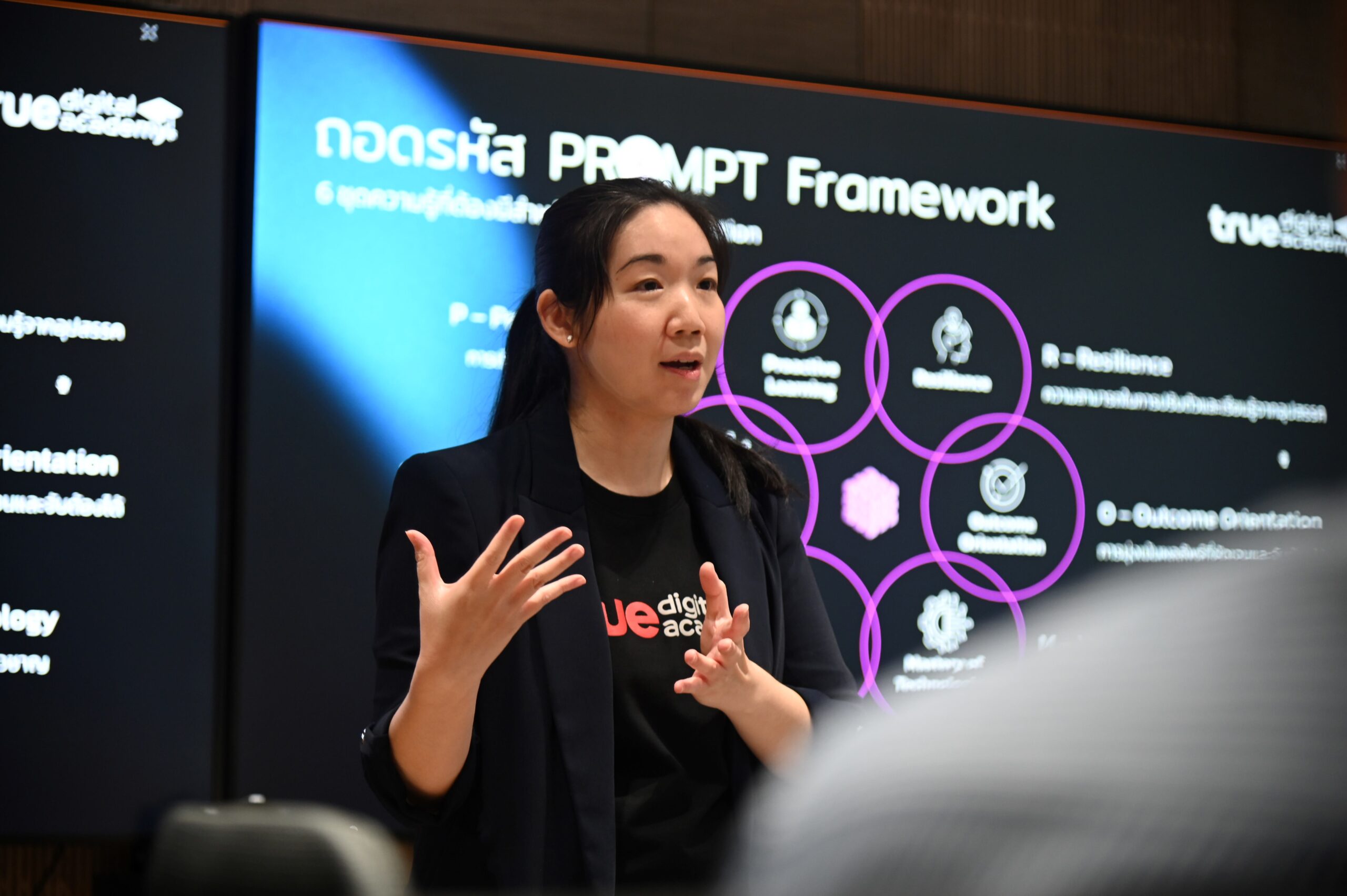
True Digital Academy supports continued education and lifelong learning with the goal of helping workforce, organizations, and Thai people become more future-ready. Dr. Chonnikarn addressed the role of entrepreneurship education, stating that it is essential both within True Corporation itself and for the many leading organizations with which True Digital Academy has the chance to work. Furthermore, driving AI within an organization is one of the significant shifts that requires entrepreneurial skills to effectively manage.
Taking the context of a large corporation like True Corporation as an example, the kinds of skills for driving innovation with AI are the foundations of what a good entrepreneur is. These include the ability to define problems clearly, the ability to work outside of the organization’s current resources, the ability to be super resourceful, resilient, as well as being able to utilize technology effectively alongside critical thinking skills. Therefore, entrepreneurship is a key factor for large companies, many of which are striving to make it work. True Corporation established Center of Excellence to manage the innovation portfolio, as well as a Digital and AI Lab responsible for transforming ideas into Proof of Concepts and building an innovation ecosystem with various stakeholders. Consequently, there is a very high demand for “entrepreneurship” skills and mindset within the organization. Furthermore, in terms of education for management, there is an integrated executive program to enhance skills covering venture mindset, implementing end-to-end innovation, and building solid ideas within the organization.

In addition, through the collaboration with various organizations, True Digital Academy has observed two emerging trends:
- The development of skills that underpin a good entrepreneur: Organizations are prioritizing problem-solving, major business mindsets, lateral thinking across disciplines, and developing the business sense for scaling ventures. This also includes leveraging technology and AI, as well as resilience.
- AI-focused Hackathons: There is an increasing demand for hackathon projects, particularly those focused on AI. This reflects the organizations’ need to drive innovative ideas and encourage their workforce to be entrepreneurial.

Overcoming Business Challenges with Entrepreneurship
Dr. Chonnikarn highlighted a priority for entrepreneurship to solve business challenges are strategic questions and directions that are difficult to find straightforward answers to. Innovation and entrepreneurship must serve as the engines to drive and formulate growth strategies in new areas where there are no direct or pre-formulated ways to succeed. For instance, True Corporation, a Telecom-Tech company, aims to become an AI-First Organization. As such, the company needs to leverage innovation and our entrepreneurial DNA to define strategies regarding customer experience, growth, the integration of AI in the workforce, and people development. In parallel, the organization should consider both internal and external stakeholders. Internally, this involves how to use innovation and apply entrepreneurship to the operations to enhance efficiency and effectiveness. Externally, it is about creating better customer experiences and ensuring that AI is used in processes that add value and create customer satisfaction. This also extends to the broader entrepreneurship and innovation ecosystem, such as university collaborations, industrial partnerships, access to funding sources, co-commercialization models, and governmental stakeholders.

Breaking Down Education-Practice Silos and Equipping Students with the Right Tools for Future
The transfer of knowledge to cultivate entrepreneurship among the new generation is something all sectors can support. Dr. Chonnikarn shared insights from the educator’s point of view for nurturing this generation, emphasizing two vital aspects: 1) The educators should ensure that tooling is kept pace with technological advancements. For example, with the emergence of one-person businesses enabled by AI, education should cover how to leverage AI for market segment discovery, market research, as well as operational tasks. They also should ensure that essential foundational knowledge, such as logical thinking and problem-solving, remains core. 2) Break the education-practice silos, integrating learning with the real needs and problems of the businesses. An example is the collaboration model between True and many universities through True LABs to strengthen the innovation ecosystem, foster mutual learning, and create career opportunities for students. This also includes promoting education through Action Learning projects, organizing Hackathons and Open Innovation Runways to create linkages with real problems and specific needs for both students and workforce, and co-creating commercialization models between universities and companies. These activities are aimed to support entrepreneurship education to be grounded in reality and capable of creating a truly positive impact on society.