



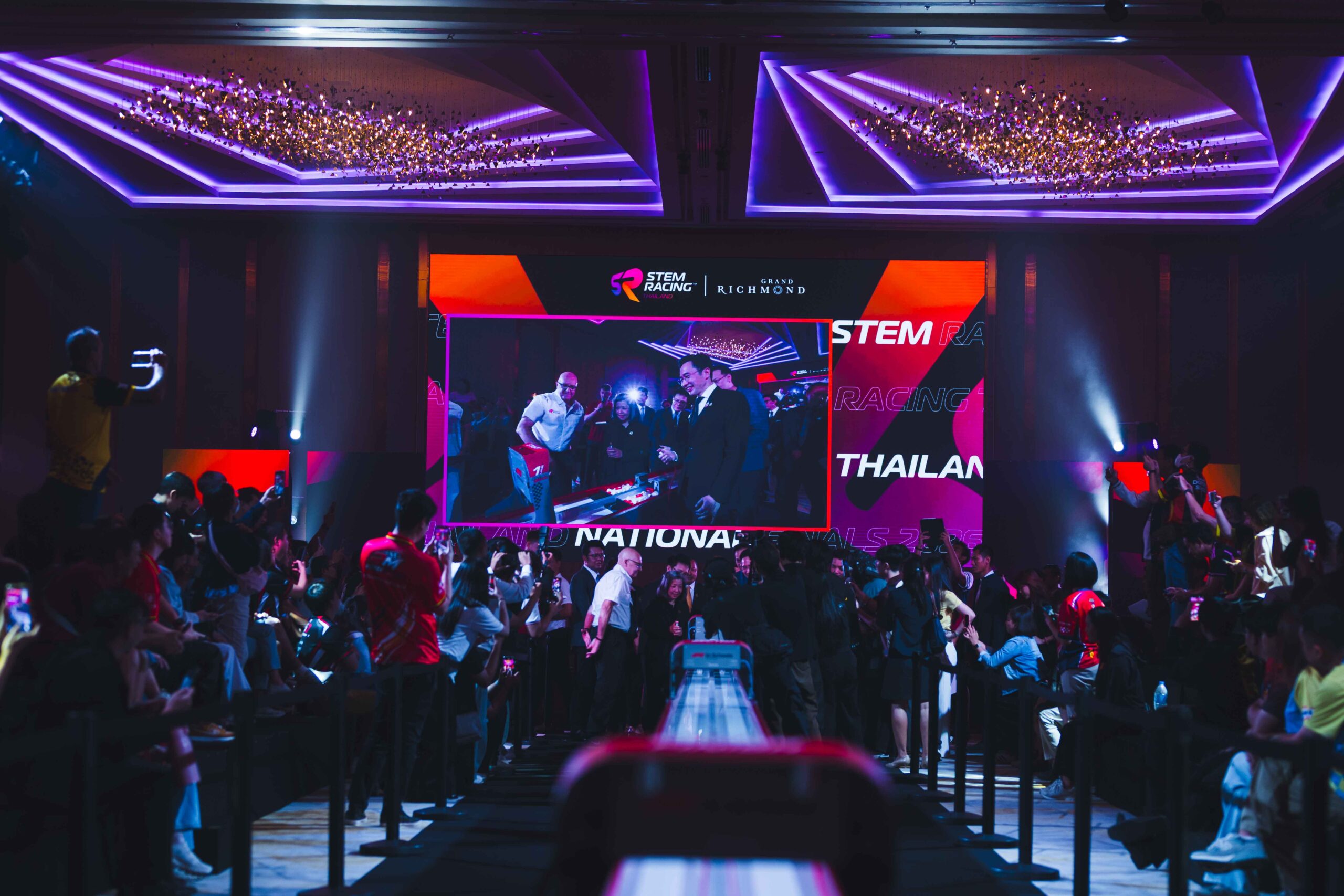
For most people, a weekend in October is a time to relax. But for a group of young people passionate about engineering and the speed of racing cars, it was a weekend they had been eagerly anticipating: the STEM Racing Thailand National Finals 2026.
Part of a global competition, STEM Racing draws inspiration from Formula 1, challenging young people to apply their knowledge of Science, Technology, Engineering, and Mathematics (STEM) to design and build miniature racing cars. Beyond engineering, participants gain hands-on experience in project management, marketing, and teamwork, mirroring the operations of a professional racing team.
Among the competing teams was AU Virtus, a team of young people with autism. This was not their first appearance at the competition, but their third consecutive year. More importantly, it marked a significant milestone as they advanced to the more demanding Development Class.
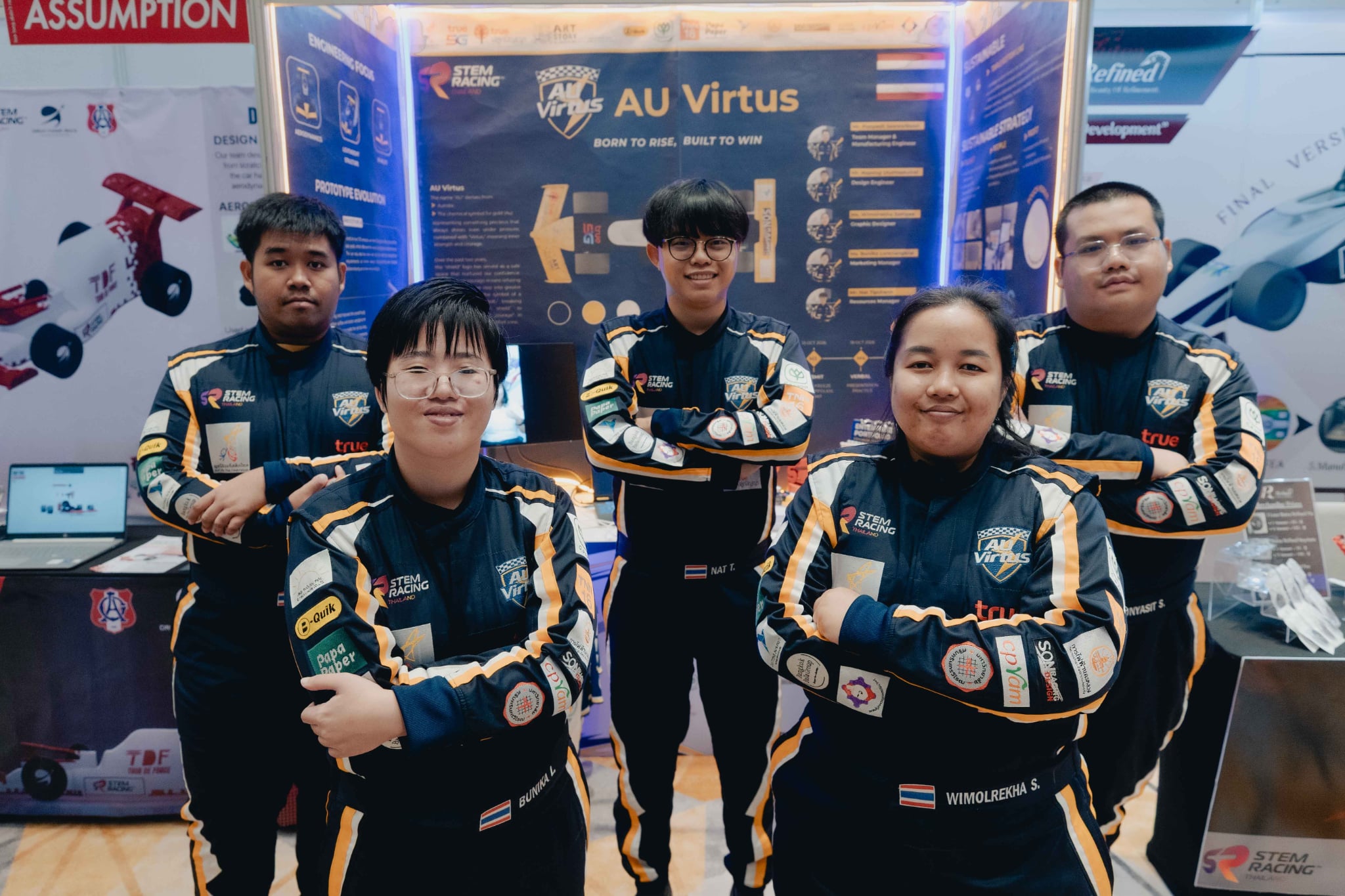
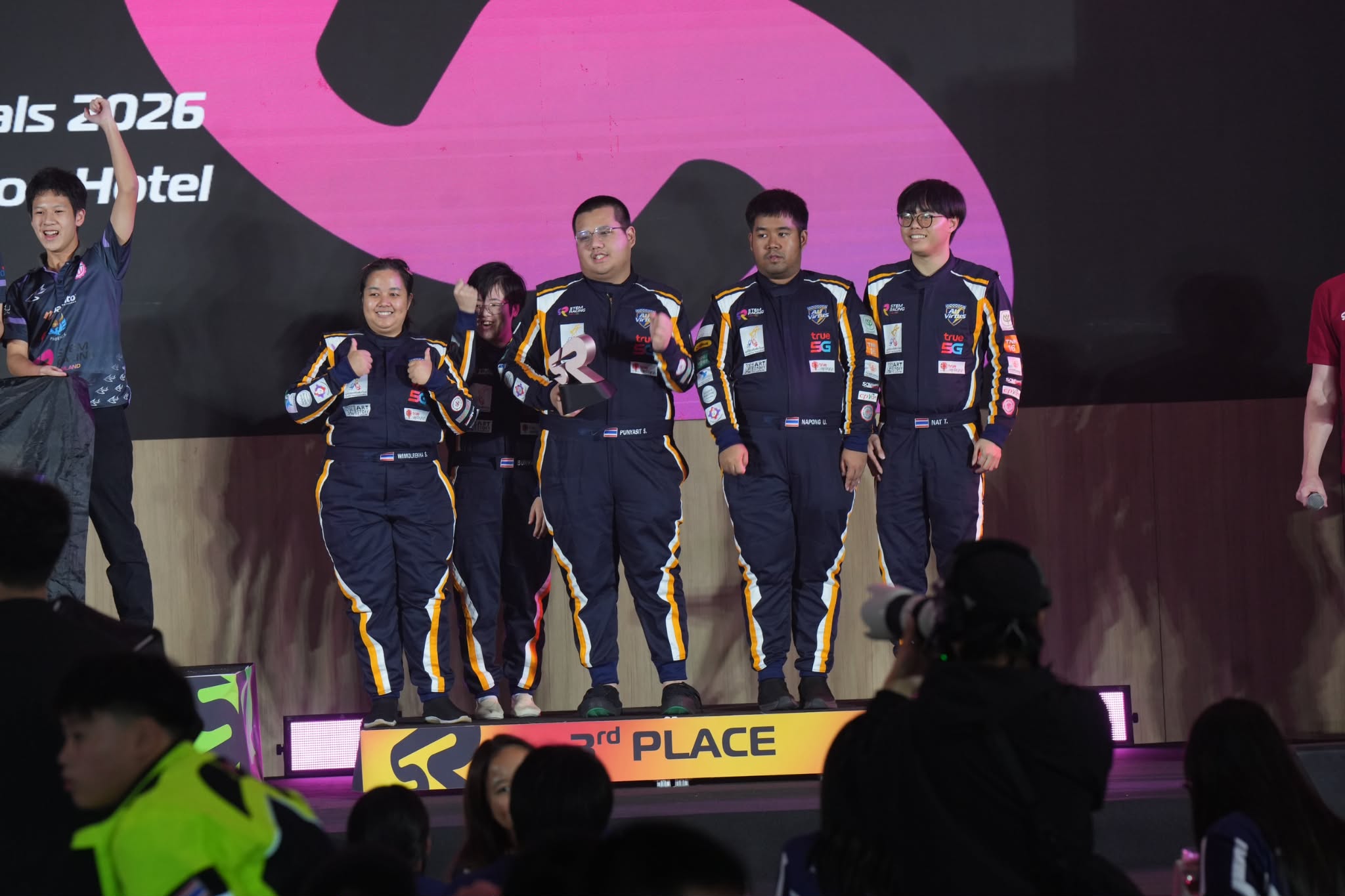
Amid the excitement of the competition, the five members of AU Virtus stood together in their navy-blue racing suits. They looked no different from the other young competitors around them. Although they were the only team comprising autistic participants, they received no special privileges. What they brought to the competition was the knowledge and skills they had developed through years of practice, along with a determination to demonstrate their abilities under the same rules as everyone else.
Growing Through Experience and Embracing New Challenges
“We’ve gained experience over the past two years and have continued to improve. This year, I think we’re confident enough to compete in the Development Class. We want to show that people with autism can achieve the same things as anyone else,” said Pun – Punyasit Sawawiboon, the team’s Project Manager and Manufacturing Designer, reflecting on their growing confidence.
The team’s journey began in 2024, when young participants from the Autism Thai Foundation competed in the Entry Class of the F1 in Schools Thailand National Finals under the name Lucky AU Stars. They earned second place in the Team Identity Award category.
The following year, they returned as AU Star Racing, achieving even greater success at the STEM Racing Thailand National Finals 2025. They won first place in the Team Identity Award category and third place in the Design Portfolio Award category.
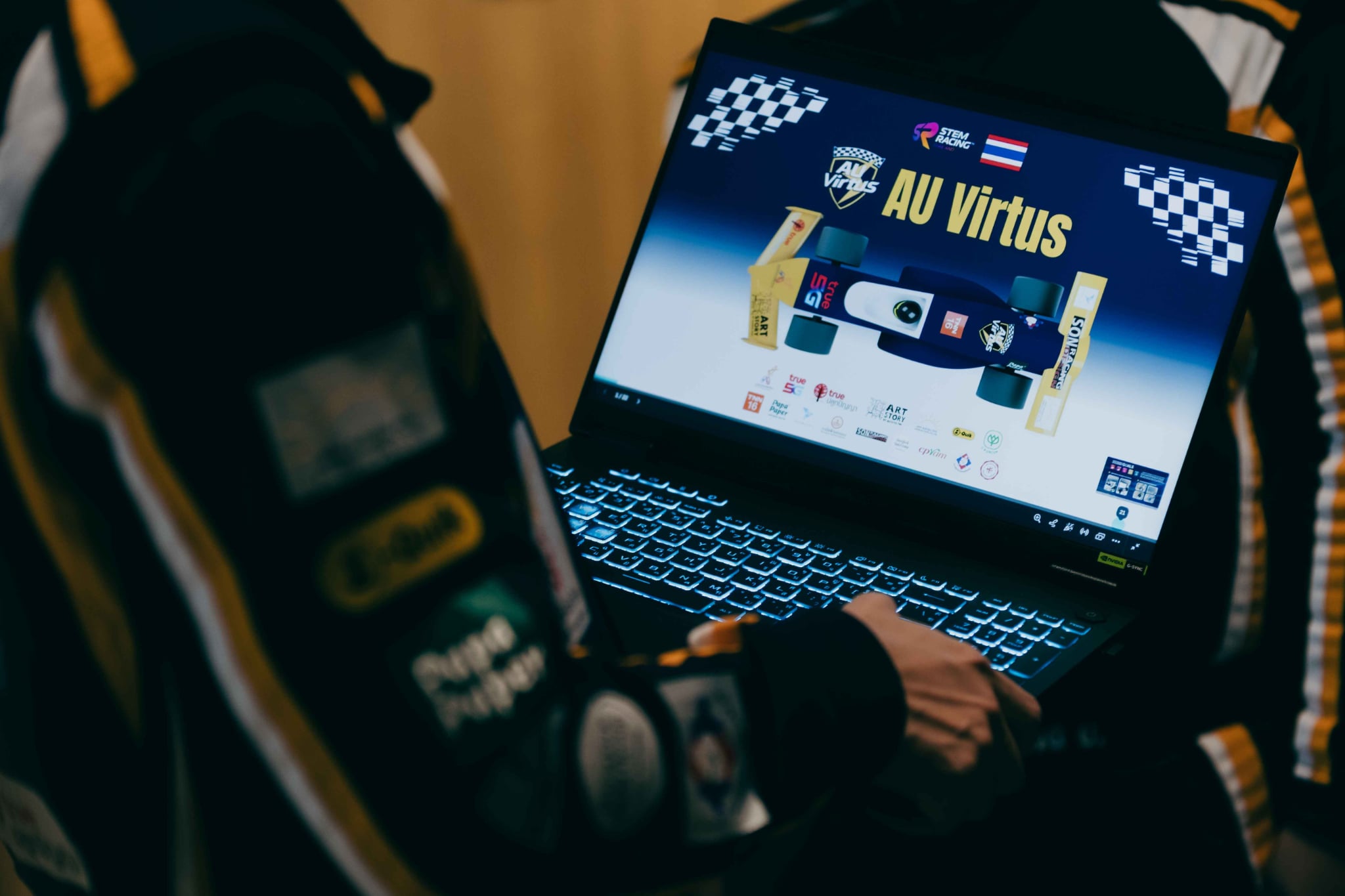
Advancing to the Development Class in 2026 presented a much greater challenge. Unlike the Entry Class, where teams could modify a standard car chassis, the Development Class required participants to design their racing cars entirely from scratch.
To mark this new chapter, the team adopted the name AU Virtus, reflecting their development and growing confidence. They even changed their signature team color from light blue to navy blue to symbolize their maturity.
“The name AU Virtus combines ‘AU,’ which represents autism and the chemical symbol for gold, with ‘Virtus,’ the name of the Roman goddess of courage. It also sounds similar to ‘victory,'” explained Ploy – Bunika Lorkriangkrai, the team’s Marketing Manager.
The new name, developed collectively by the team, became a symbol of their readiness to embrace a new challenge.
Five Individuals, One Team
Over the six months leading up to the competition, all five AU Virtus members worked closely together, taking on responsibilities that matched their individual strengths.
The process began with the design of their miniature racing car. Ken – Napong Utumsakulwat, responsible for Design Engineering, created the initial sketches, carefully considering aerodynamic principles to help the car achieve its target speed.
“It took me at least three weeks to complete the sketches. The most difficult parts were the wings and the car’s dimensions because I also had to calculate its weight,” Ken explained.
From these sketches, Poon developed the design further using Autodesk Fusion, a professional engineering software platform that supports three-dimensional modeling and computational fluid dynamics (CFD) analysis.
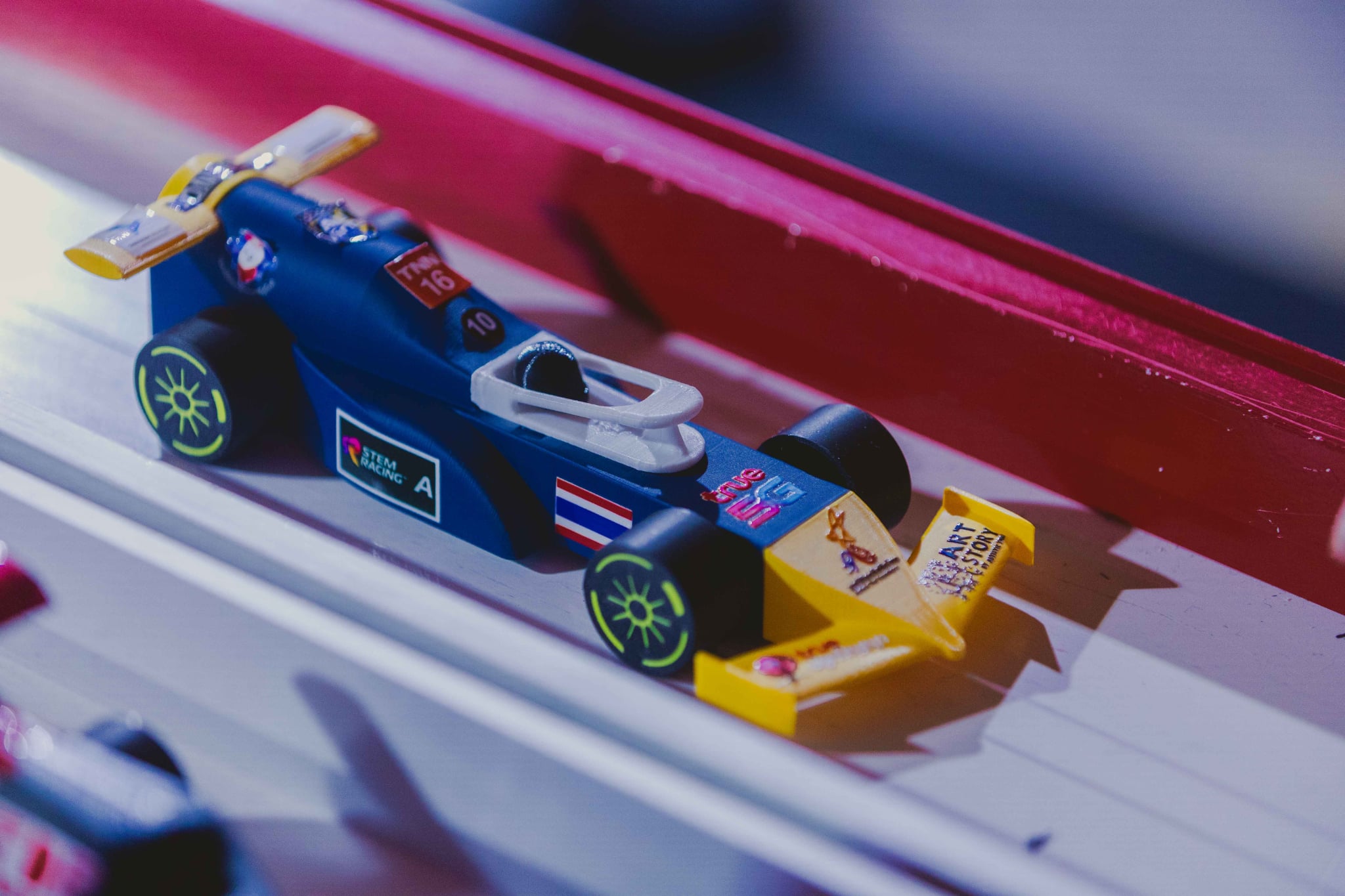
Having first learned to use the software during the team’s initial competition, Poon had become increasingly proficient over the years.
Building the miniature car, however, was far from a straightforward process. After producing components with a 3D printer and assembling the vehicle for speed testing, the team encountered problems with dimensions and parts that did not fit together as intended.
Poon and Ken worked together to refine the design, making adjustments and conducting repeated tests until the car was ready for competition.
Meanwhile, the other three team members focused on their own responsibilities.
Apple – Wimonrekha Sompee handled graphic design, creating the team’s logo, uniforms, and exhibition booth.
Por – Nat Thipchan, a newcomer to the team this year, managed the budget and resources, while Ploy coordinated activities and secured sponsorships.
All five members also practiced presenting their project plans.Together, these activities represented STEM learning in action. From analytical thinking, design, experimentation, and problem-solving to creativity, communication, and collaboration, the team developed essential future-ready skills for learning and working in a rapidly changing world.
Communication Lessons Beyond the Classroom
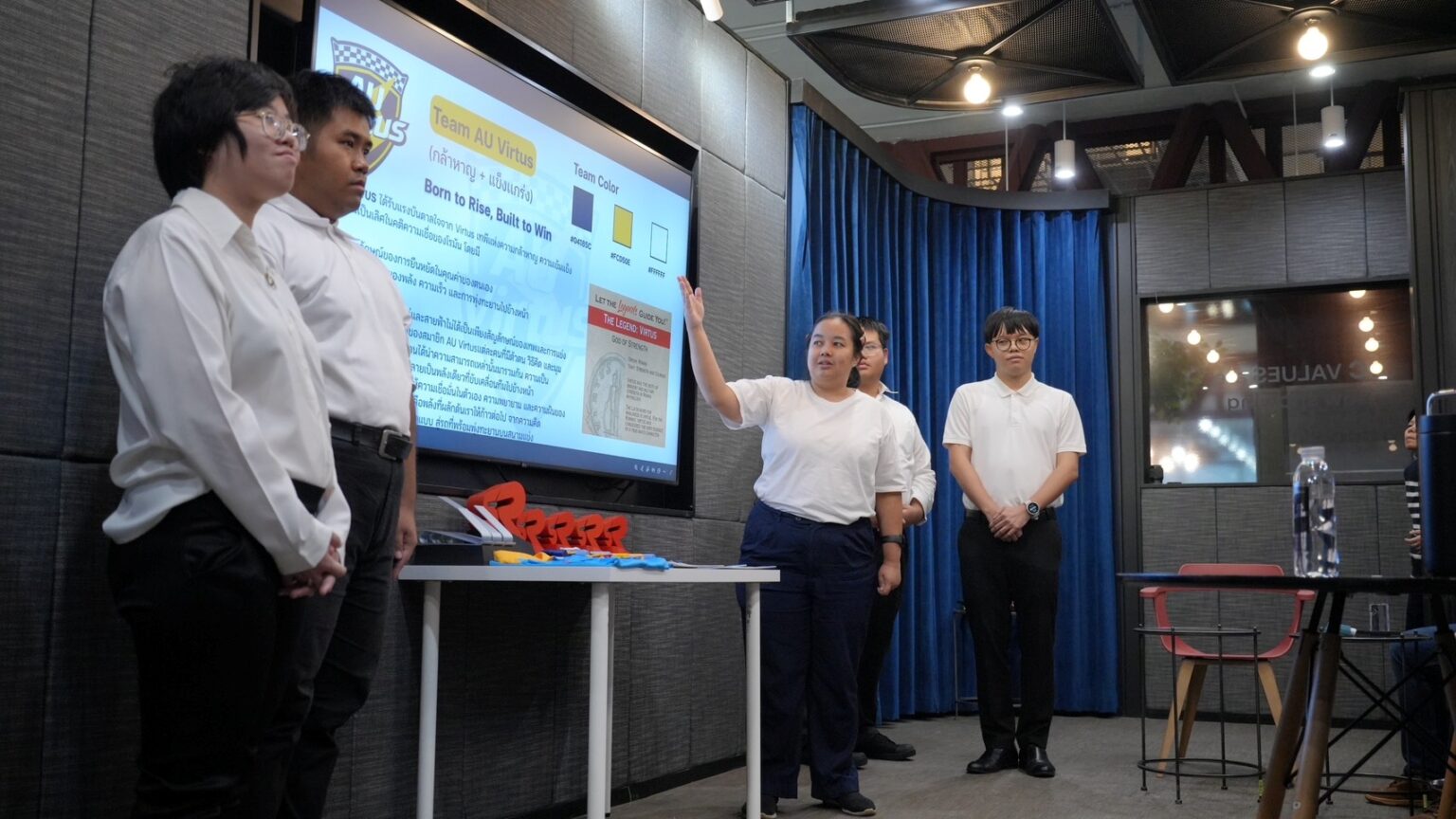
One of the most challenging aspects of the competition, according to several team members, was approaching business executives to seek sponsorship.
“At first, I was nervous, but eventually I got used to it,” said Ploy, who was directly responsible for coordinating sponsorships.
Apple added, “We really had to use a lot of communication skills. We were shy, too.” For Por, who joined the team for the first time this year, the experience was particularly enjoyable. “Everyone on the team had a chance to talk with sponsors and persuade them to support us. We had to practice introducing ourselves and create engaging presentations using Canva and PowerPoint,” he said.
What initially seemed like a difficult task ultimately became evidence of the team’s progress in communication skills, an area often perceived as challenging for people with autism.
Chusak Jantayanon, Founder and Chairman of the Autism Thai Foundation, who has followed the team’s development throughout the past three years, observed a clear transformation.
“They can communicate well with other people in society. They know how to organize their thoughts and express themselves appropriately, particularly when presenting their work,” he said.
The Autism Digital Learning Center: Building a Foundation in Technology
“STEM-related work is extremely challenging for young people with autism,” Chusak began. He went on to explain, “The software used in this competition is at a vocational or university level. Yet these young people with autism, who are outside the formal education system, have been able to learn and use it. This shows that when they are given opportunities to learn about subjects that genuinely interest them, they can develop their abilities.”
A key foundation of AU Virtus’s technological capabilities is the Autism Digital Learning Center (ADLC), established through a collaboration between True Corporation, through TruePlookpanya, and the Autism Thai Foundation.
The center promotes digital skills among people with autism by providing access to computers, internet connectivity, technology learning programs tailored to autistic learners, and a range of software applications.
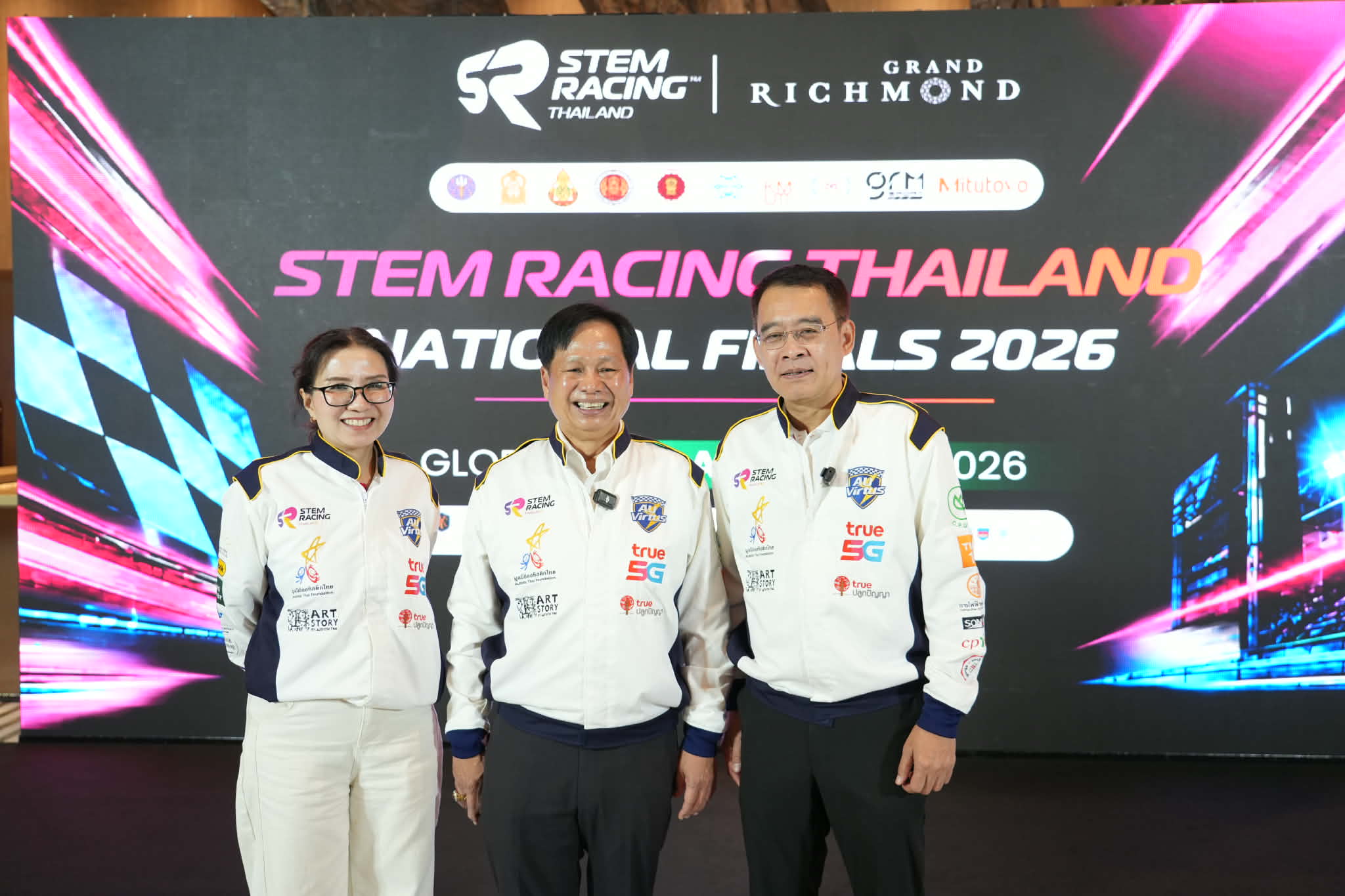
Rommuk Piajan, Deputy Head of TruePlookpanya, who has witnessed the team’s progress over the past three years, shared her perspective.
“The AU Virtus team is a reflection of what the Autism Digital Learning Center has helped make possible. The students are already familiar with technology and have developed digital skills through regular practice. This competition has given them another opportunity to strengthen those capabilities.”
“They used Autodesk CAD/CAM software to design their miniature racing car, which was not particularly difficult for them because of their existing experience. TruePlookpanya provided additional tools to help them build confidence and demonstrate their potential to the judges. This time, they were truly able to make full use of the Autism Digital Learning Center.”
Another important factor was the support of a dedicated mentoring team formed through a collaboration among the Autism Thai Foundation, TruePlookpanya, and students from the Faculty of Social Business, Srinakharinwirot University (SWU). These mentors shared their knowledge, provided guidance, and supported AU Virtus throughout the competition journey.
Their involvement demonstrated how young people can work together to create meaningful opportunities for autistic youth to develop their full potential.
From Competitors to Future Mentors
On competition day, Poon took on the role of Racer, responsible for launching the miniature racing car by pressing the release button with the fastest possible reaction time.
His accuracy and quick reflexes helped the team perform strongly on the track, win races against opponents, and advance to subsequent rounds.
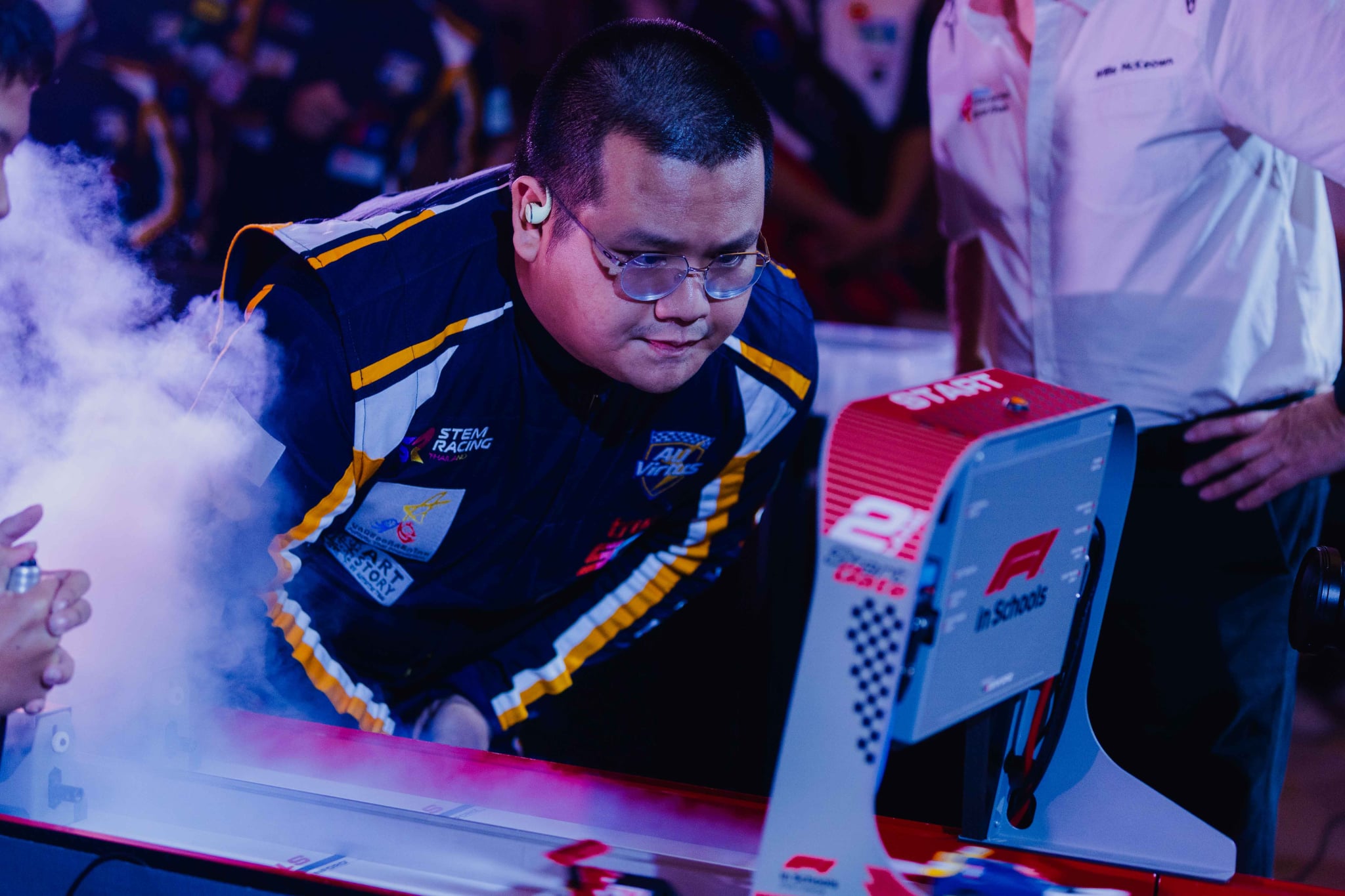
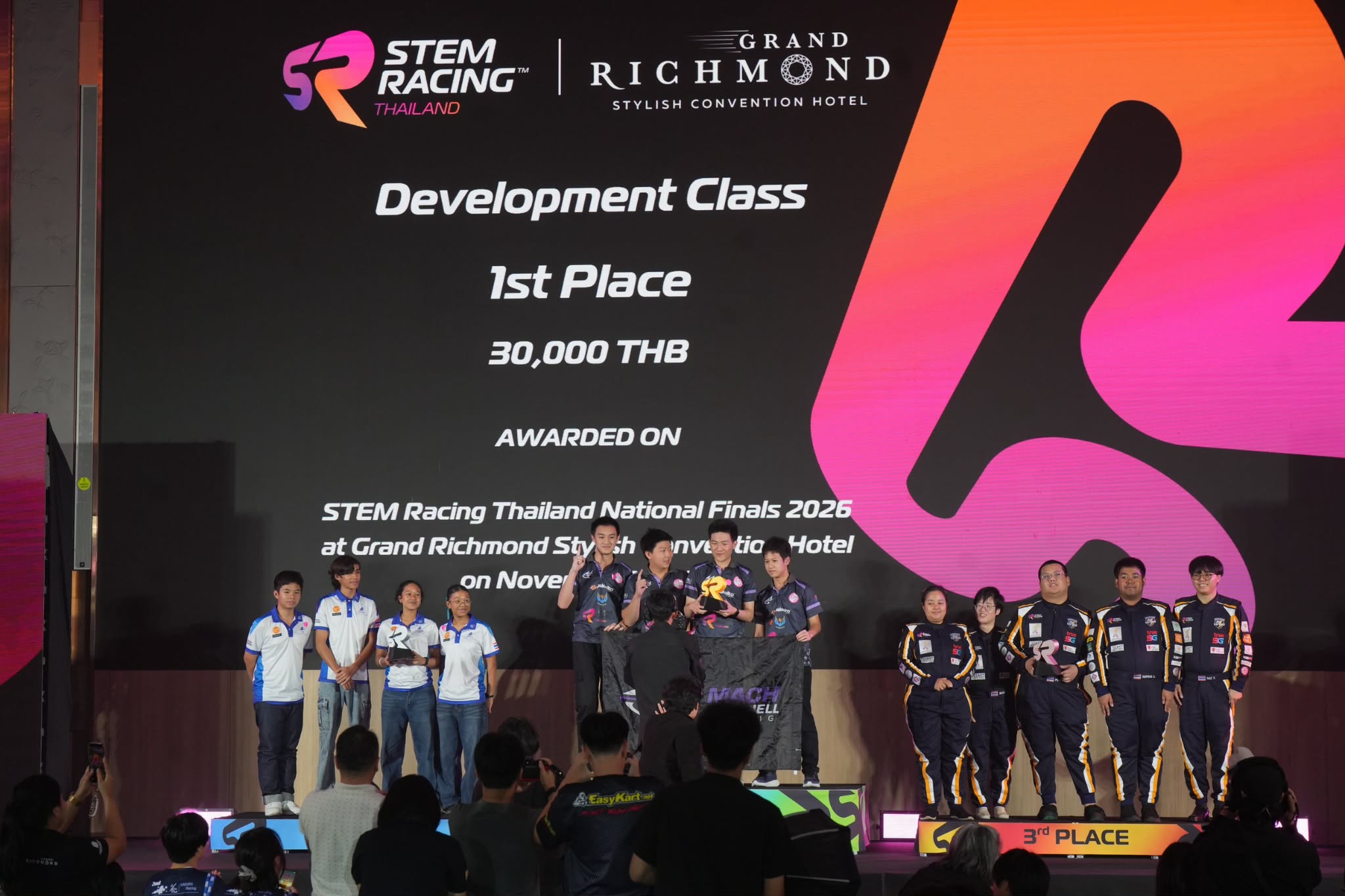
The STEM Racing Thailand National Finals 2026 concluded with a major achievement for AU Virtus.
The team secured third place in the Overall Award category of the Development Class, competing against 13 other teams. The award recognized the team’s overall performance across the various aspects of the competition.
AU Virtus also ranked among the Top 3 in several key categories, including Verbal Presentation, which assessed the team’s ability to present their project plans and STEM technical knowledge in English; Sponsorship & Marketing, which recognized their marketing and sponsorship efforts; Team Identity, which highlighted their distinctive team identity; and Judges’ Choice, which recognized outstanding performance selected by the judging panel.
For the members of AU Virtus, however, success extends far beyond winning awards.
“Next year, I’d love to see more teams of young people with autism join the competition. We could help train the younger participants and prepare them to compete,” Ploy said.
Her ambition aligns with the shared vision of TruePlookpanya and the Autism Thai Foundation: to empower AU Virtus members to become STEM mentors who can pass on their knowledge and experience to the next generation of autistic youth.
From their first competition in the Entry Class to achieving third place in the Development Class, the five members have demonstrated their abilities through dedication, continuous learning, and hands-on experience.
Yet what they hope the wider public will recognize goes beyond their achievements on the racetrack. They want people to see the potential of individuals with autism, each of whom has unique strengths, challenges, and abilities.
As Apple expressed on behalf of herself and her teammates:
“We may have some weaknesses, and everyone on the autism spectrum is different. We are diverse, but we can achieve the same things as anyone else.”