




Responsible AI Is Thailand’s Next Competitive Advantage
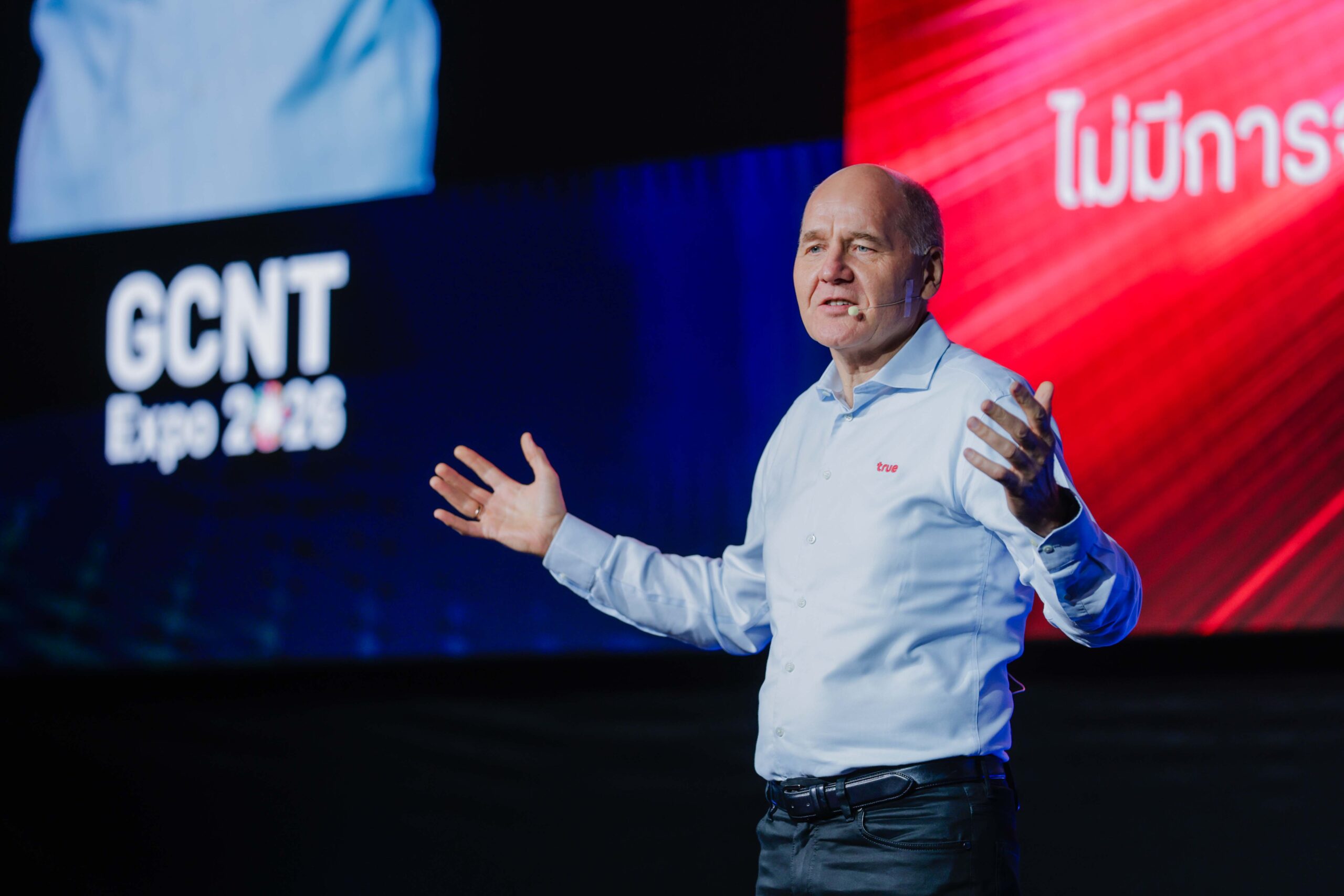
Sigve Brekke, Group CEO of True Corporation Plc., shared his perspectives in a keynote titled “From Algorithmic Shock to Ethical Shift: Why Trust Is the Currency of Thailand’s Digital Future” at GCNT EXPO 2026, held under the theme “FROM SHOCK TO SHIFT – Sustainable Transition in a Fractured World”. The event was organized by the Global Compact Network Thailand (GCNT) at True Digital Park.
Would you drive a supercar on a road with no speed limits, no traffic lights and no rules?
Probably not. The car may be powerful, but without clear rules, that power becomes a risk. AI is much like that supercar: incredibly fast, powerful and full of potential.
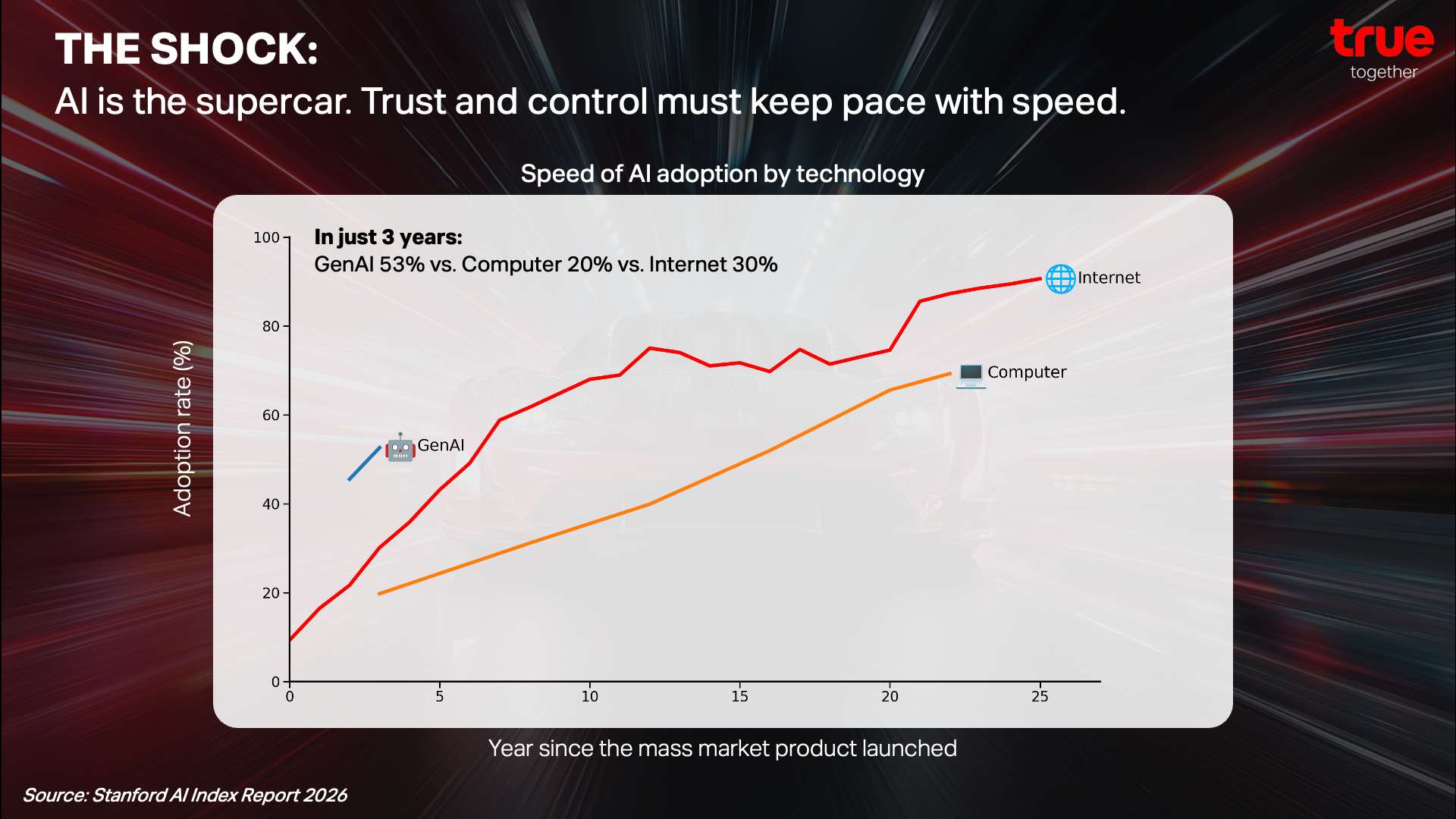
AI’s rapid rise began with a collapse in costs. According to the Stanford AI Index, the expense of running a GPT-3.5-level system plummeted over 280-fold between late 2022 and 2024. Fueled by a 30% annual drop in hardware costs and a 40% leap in energy efficiency, AI shifted from an experiment to essential infrastructure faster than the PC or the internet. This economic reality drove record-breaking uptake: 4 billion adults, nearly half of the world’s population, now use AI monthly. GenAI reached 53% adoption within three years, about 1.8x the internet and 2.7x the PC at the same stage.
A year ago, the question business leaders asked about artificial intelligence was how fast they could deploy it. Today, the more urgent question is who can be trusted to govern it. That shift, from speed to stewardship, will define whether Thailand’s AI economy grows on a foundation people believe in, or on one built on reluctant tolerance.
Used well, AI can help businesses serve customers faster, widen access to knowledge and free employees from repetitive work. Without the right safeguards, it can also create risks, from bias and misinformation to privacy, security and loss of trust.
The Accountability Gap
Everyone of those adoption curves represents a quiet transfer of consequence, from a person to a system. AI increasingly generates, recommends, prioritizes, decides, and acts on our behalf. And with each step in this phenomenal development, the question people ask is no longer only whether the answer is accurate. It is who can detect failures, who can stop the system, who can correct possible harm and who can explain what happened.
That is the accountability gap, and it is the real source of the trust problem.
The data bears this out starkly. A 2025 survey of more than 48,000 people across 47 countries, conducted by the University of Melbourne and KPMG, found that regular, intentional use of AI runs far ahead of people’s willingness to trust it. Around 66% report using it regularly, but only 46% say they trust it. In Thailand, 77% of respondents told the Stanford AI Index they see AI as more beneficial than harmful.
Public enthusiasm is a great starting point, but it doesn’t mean every system we deploy automatically deserves that trust. For leaders, the practical lesson is clear: AI delivers value only when its limits are understood and someone has the authority to decide where it should not be used or when it is not yet ready.
That is why I believe ‘judgment’ is one of the critical scarce resources of this decade.
Judgment is what frames the problem, defines success, and sets boundaries. Judgment requires real accountability, knowing exactly who can hit the brakes or change course. Just keeping a human “in the loop” does nothing. Without the time, knowledge, and authority to intervene, human oversight is functionally meaningless.
Why Governance Matters
This is the case for Responsible AI, not as a compliance checkbox but as the institutional design that makes judgment explicit, accountable and contestable.
Yet the OECD’s 2026 Digital Government Outlook found that among 36 member countries, while nearly all had adopted at least one AI guardrail, only 39% required a pre-deployment risk assessment, 31% conducted post-deployment audits, and just 22% offered citizens a feedback or complaint mechanism. Principles are spreading faster than the accountability that gives them teeth.
At True, we have tried to close that gap in our own operations. We moved from adoption phase to a more formalized, end-to-end governance lifecycle, beginning with a seven-question risk screening aligned with international Responsibility AI principles that automatically flags any project touching personal data or a large population as high risk.
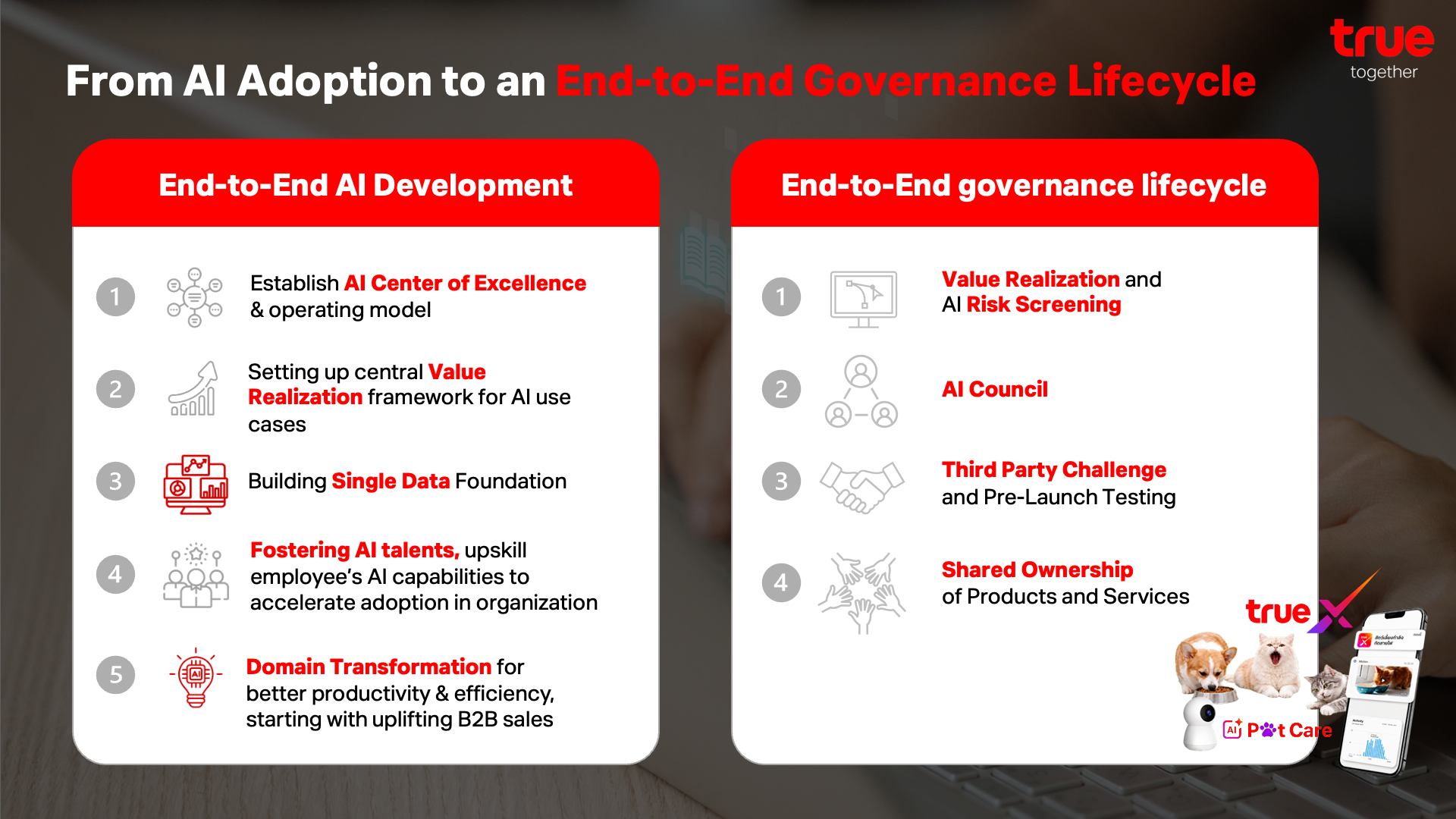
Those projects go before a standing AI Council chaired by senior leadership and our head of privacy and security, not a rubber stamp. We run privacy impact assessments and security audits on data residency and encryption. Before launch, generative models must clear accuracy thresholds as high as 99% for high-risk use cases, with mandatory human oversight for consequential decisions.
Because roughly 70% of our AI is built with external partners, we now require them to prove data sovereignty and correct inaccurate claims as a condition of doing business with us. Embedding these controls required some adjustment; governance can add review to teams under pressure to ship. We addressed that by embedding Responsible AI into our Code of Conduct, turning it from an IT responsibility into a shared corporate mandate.
A Shared Infrastructure of Trust
Thailand’s National AI Strategy sets ambitious targets: more than 30,000 AI professionals trained, at least 600 organizations adopting AI, and 48 billion baht in business and social impact by 2027. Reaching those targets will require Thailand to scale governance capacity as deliberately as it scales adoption. AI literacy must combine understanding with responsibility. It is not simply knowing how to use AI or write a good prompt. People need to understand both its power and its limitations. AI literacy must therefore give people the judgment to recognize these limitations, to know what to trust, what to challenge, what to verify, when to stop and where AI should not be used.
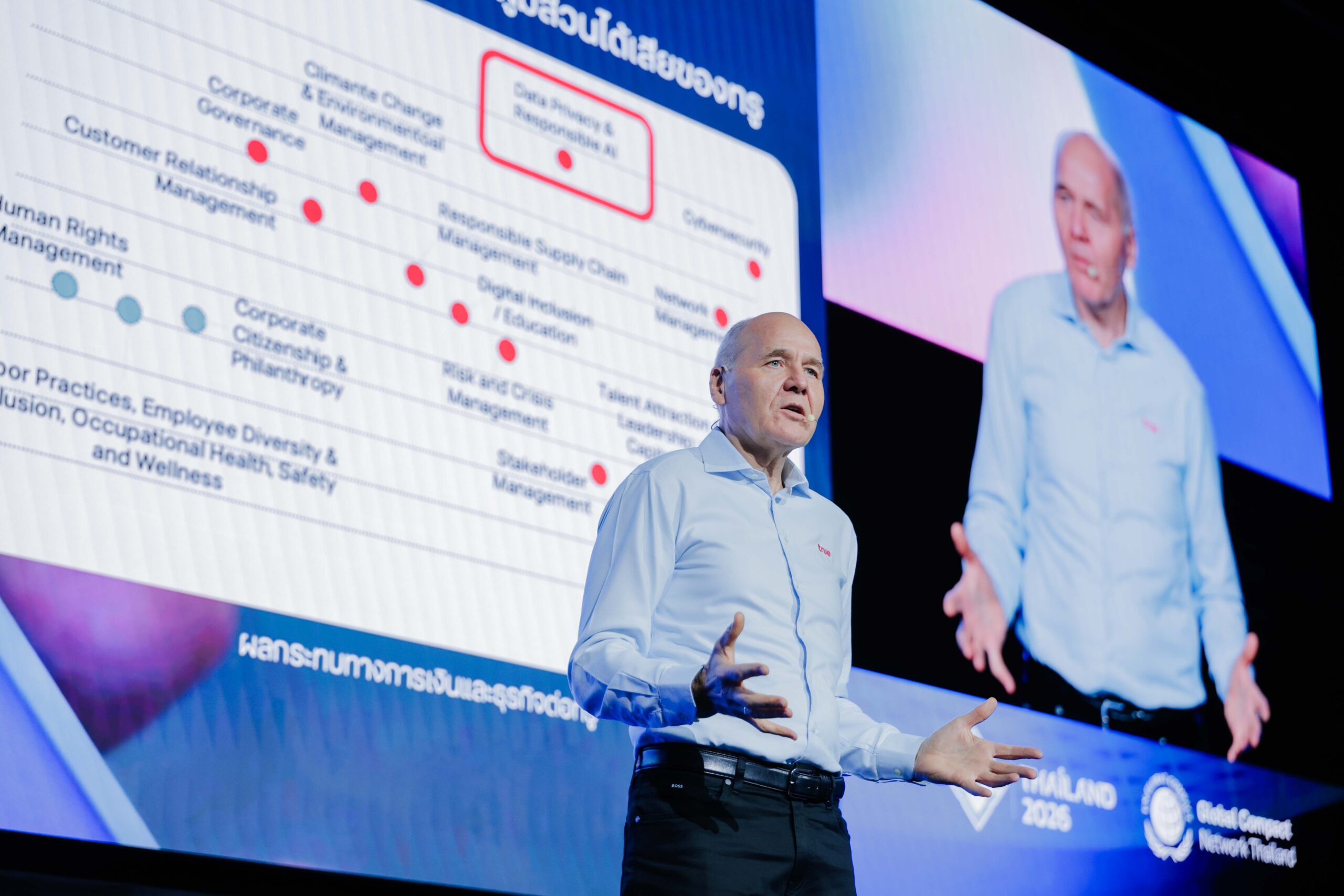
In addition, Thailand needs sandboxes where government, businesses and experts can test real AI use cases in a controlled environment, gathering evidence, identifying risks and improving safeguards before scaling. If AI is the supercar, the sandbox is the test track, not the public road. The sandbox is not a place without rules; it is a place where we can safely test and build better rules.
Responsibility must also be shared. Government must protect rights and provide ways to seek recourse. Businesses must own their evidence and outcomes. Telecom operators must secure connectivity, data and vendor accountability. And citizens must retain the right to question decisions that affect them.
AI gives us speed. Governance gives us direction. Accountability earns us trust. And trust will be the currency of Thailand’s digital future.